
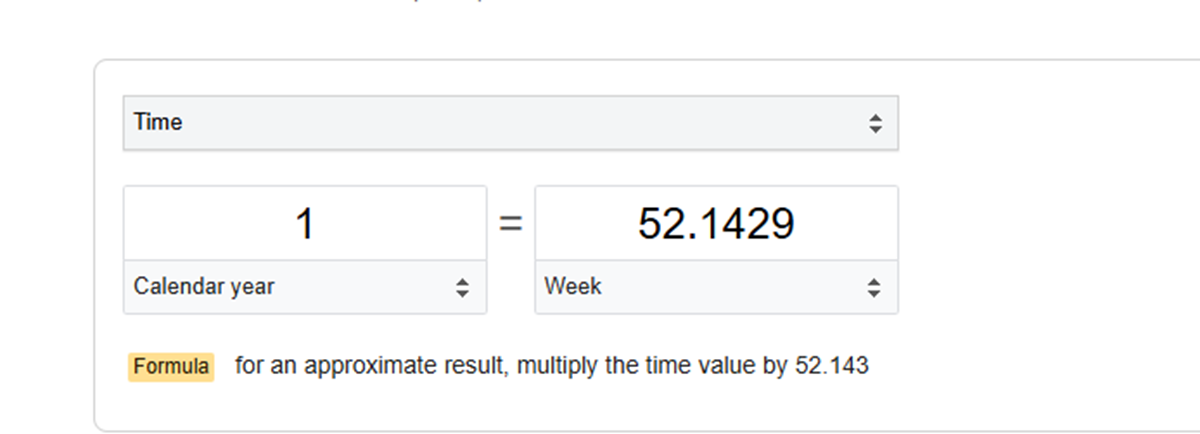
How Many Weeks in a Year? We find the answer to this question by reading this complete article. A year is a standard unit of time used worldwide to measure long periods, but many people often wonder exactly how many weeks it contains. Understanding the number of weeks in a year is useful for planning work schedules, academic calendars, financial calculations, and personal goals. Since a year is based on the Earth’s rotation around the Sun, it does not divide evenly into weeks. As a result, most years contain a little more than 52 weeks. This small difference plays an important role in leap years, calendars, and long-term time management.
How Many Weeks in a Year?
The question “How many weeks are in a year?” seems simple at first, yet the answer involves fascinating details about how our calendar system works. While most people commonly say there are 52 weeks in a year, the reality is slightly more complex. Understanding this topic requires looking at days, weeks, leap years, and the history of calendar calculations. This article explains all aspects of the question and the reasons behind them in a clear and detailed way.
The Basic Structure of a Year
A year is defined as the time the Earth takes to complete one full orbit around the Sun. This period is approximately 365.2422 days, not an exact whole number. For everyday use, we round this to 365 days in a common year.
A week, on the other hand, consists of 7 days. The seven-day week has been used for thousands of years and is linked to ancient astronomical and religious traditions. When we divide the total number of days in a year by seven, we can determine how many weeks fit into a year.
Weeks in a Common (Non-Leap) Year
A common year has 365 days. When we divide:
365 ÷ 7 = 52 weeks and 1 day
This means that a regular year contains 52 full weeks, plus one extra day. That leftover day does not form a complete week but plays an important role in how calendars shift from one year to the next.
So, in practical terms:
- A common year has 52 weeks and 1 extra day
- This extra day causes the weekday of January 1 to move forward by one day each year
Weeks in a Leap Year
To account for the fact that a solar year is slightly longer than 365 days, we add an extra day every four years. This is known as a leap year, which has 366 days.
Now divide:
366 ÷ 7 = 52 weeks and 2 days
So, a leap year contains:
- 52 full weeks
- 2 extra days
These two extra days cause the calendar to shift by two weekdays instead of one in the following year.
Why Not 53 Weeks?
A common question is why we don’t simply say there are 53 weeks in a year. The reason is mathematical. To have 53 full weeks, a year would need:
53 × 7 = 371 days
Since no year has that many days, a full 53-week year is impossible under the standard Gregorian calendar. However, some years can appear to have 53 weeks depending on how weeks are counted.
Years with 53 Week Numbers
In some systems, especially the ISO week date system, a year can have 53 numbered weeks. This happens when:
- January 1 falls on a Thursday (or Wednesday in a leap year)
- The year starts and ends in a way that creates an additional week number
Even in these cases, the year still has only 365 or 366 days, not extra time. The “53rd week” is a result of how weeks are numbered, not because the year actually has more days.
Why Extra Days Exist in a Year
The main reason we have extra days beyond full weeks is that the Earth’s orbit does not fit neatly into a seven-day week system. The mismatch comes from two different natural cycles:
- The solar cycle (Earth’s orbit around the Sun)
- The weekly cycle, which is a human-made structure
Since 365 is not divisible by 7, leftover days are unavoidable. These extra days accumulate and shift the calendar slightly each year.
The Role of Leap Years
Leap years exist to keep our calendar aligned with the seasons. Without leap years:
- Seasons would drift over time
- Summer could eventually occur in December
- Agricultural, religious, and civil events would lose consistency
By adding one extra day every four years, the Gregorian calendar stays closely synchronized with Earth’s actual orbit. This adjustment indirectly affects how weeks are distributed across years.
Historical Perspective on Weeks and Years
The seven-day week dates back to ancient civilizations, including the Babylonians, who associated each day with celestial bodies. The Roman calendar later adopted this structure, and it became widely accepted through religious and cultural influence.
The Gregorian calendar, introduced in 1582, refined earlier systems to improve accuracy. While it standardized months and leap years, it did not attempt to force years into exact weeks, as doing so would complicate long-term timekeeping.
Practical Implications of Weeks in a Year
Understanding how many weeks are in a year matters in many real-life situations:
- Payroll systems that operate on weekly schedules
- School calendars planning academic weeks
- Project management and yearly planning
- Fitness and training programs structured around weekly goals
Most systems assume 52 weeks per year, with occasional adjustments to account for extra days.
Summary: How Many Weeks Are in a Year?
To summarize:
- A common year has 52 weeks and 1 extra day
- A leap year has 52 weeks and 2 extra days
- No year has 53 full weeks, though some calendars label a year with 53 week numbers
- The extra days exist because 365 and 366 are not divisible by 7
- Leap years keep the calendar aligned with Earth’s orbit around the Sun
Final Thoughts
While the quick answer is that there are 52 weeks in a year, the full explanation reveals a blend of astronomy, mathematics, and history. The presence of extra days and leap years shows how humans have carefully designed calendars to balance natural cycles with practical timekeeping. Understanding this helps us appreciate the precision and complexity behind something we often take for granted—our everyday calendar.
FAQs
Are there 52 weeks in a year?
Yes, mostly.
A normal year has 52 weeks and 1 extra day.
-
1 year = 365 days
-
365 ÷ 7 = 52 weeks + 1 day
So, it is not exactly 52 weeks, but 52 weeks and 1 day.
Is it 52 weeks or 48 weeks?
It is 52 weeks, not 48 weeks.
-
48 weeks = 336 days
-
A year has 365 or 366 days
So 48 weeks is incorrect.
Is it 52 or 53 weeks in a year?
-
Most years → 52 weeks
-
Some years → 53 weeks
Why 53 weeks sometimes?
-
A leap year has 366 days
-
366 ÷ 7 = 52 weeks + 2 days
-
Because of extra days, some calendar years include 53 weeks (in ISO calendar system)
But officially, a year is said to have 52 weeks.
क्या साल में 52 हफ्ते होते हैं?
हाँ, अधिकतर सालों में 52 हफ्ते होते हैं।
-
1 साल = 365 दिन
-
365 ÷ 7 = 52 हफ्ते + 1 दिन
इसलिए साल में पूरे 52 हफ्ते और 1 अतिरिक्त दिन होते हैं।
क्या यह 52 सप्ताह या 48 सप्ताह है?
✔️ साल में 52 सप्ताह होते हैं,
❌ 48 सप्ताह नहीं होते।
About The Author
