
List of Countries Supporting Iran: The ongoing US–Israel vs Iran conflict (2026) has created a complex global alignment system. Unlike traditional wars, support for Iran is not always direct military backing—it includes political support, proxy forces, diplomatic opposition to the US-Israel bloc, and strategic neutrality favoring Iran.
Below is a detailed, well-structured analysis of countries and groups supporting Iran, based on the latest developments.
List of Countries Supporting Iran: Latest Situation
- The conflict escalated after US–Israel strikes on Iran in February 2026.
- Iran has responded with missile and drone attacks on US allies in the Middle East.
- Regional tensions are rising with attacks across Jordan, Kuwait, Bahrain, and shipping routes.
Core Countries Supporting Iran
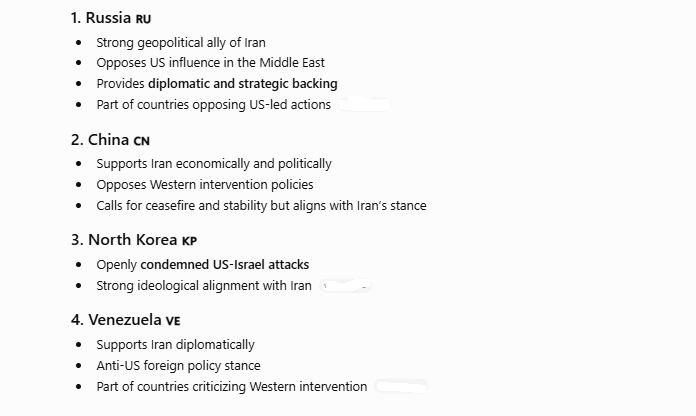
1. Russia
- Strong geopolitical ally of Iran
- Opposes US influence in the Middle East
- Provides diplomatic and strategic backing
- Part of countries opposing US-led actions
2. China
- Supports Iran economically and politically
- Opposes Western intervention policies
- Calls for ceasefire and stability but aligns with Iran’s stance
3. North Korea
- Openly condemned US-Israel attacks
- Strong ideological alignment with Iran
4. Venezuela
- Supports Iran diplomatically
- Anti-US foreign policy stance
- Part of countries criticizing Western intervention
Regional & Strategic Support (Indirect / Mixed)
These countries may not openly fight alongside Iran but show political, diplomatic, or strategic support:
5. Pakistan
- Historically maintains ties with Iran
- Has played a mediator role in ceasefire talks
- Public opinion often sympathetic toward Iran
6. Oman
- Neutral but often facilitates negotiations favorable to Iran
- Opposed escalation
7. Armenia
- Opposed US-Israel actions in early reactions
8. Some Global South Nations
Countries like:
- Brazil
- Vietnam
These nations condemned US-Israel strikes, indirectly supporting Iran’s position
Iran’s Most Important “Allies”: Proxy Forces
Iran’s strongest support does not come only from countries—but from a network known as the “Axis of Resistance.”
Key Groups:
- Hezbollah (Lebanon)
- Hamas (Palestine/Gaza)
- Houthis (Yemen)
- Shia militias in Iraq & Syria
These groups:
- Conduct direct military operations against US/Israel interests
- Act as Iran’s strategic force multiplier
Example:
- Yemen’s Houthis imposed a naval blockade on Saudi-linked routes, escalating the war
This alliance structure is central to Iran’s war strategy
Countries Opposing US-Israel Actions (Indirect Support to Iran)
Some nations don’t support Iran directly but oppose the war, which benefits Iran diplomatically:
- Turkey
- South Africa
- Ireland
- Vatican City
These countries call for peace or condemn both sides
Countries NOT Supporting Iran (Important Context)
Most Middle Eastern nations do NOT support Iran, including:
- Saudi Arabia
- UAE
- Egypt
- Jordan
These countries either:
- Support the US
- Or oppose Iran’s influence in the region
Summary Table
| Category | Countries / Groups | Type of Support |
|---|---|---|
| Strong Allies | Russia, China, North Korea, Venezuela | Political, strategic |
| Regional / Indirect | Pakistan, Oman, Armenia | Diplomatic, mediation |
| Proxy Forces | Hezbollah, Hamas, Houthis | Military |
| Neutral / Anti-War | Turkey, South Africa, Ireland | Diplomatic balance |
| Opposing Iran | Saudi Arabia, UAE, Egypt | Against Iran |
Global Alignment: U.S.–Israel vs Iran: Countries Supporting the U.S. & Israel
- United States 🇺🇸 (leading force)
- Israel 🇮🇱 (primary regional partner)
2. Western & NATO-Aligned Supporters
- United Kingdom, France, Germany (varying levels of support/logistics)
- Australia, Canada, New Zealand
- NATO leadership broadly supportive of U.S. actions
Support includes:
- Use of military bases (UK, France)
- Naval deployments and air defense
- Political backing
3. Middle Eastern & Gulf Partners
- Saudi Arabia, United Arab Emirates, Bahrain, Jordan, Kuwait, Qatar
- UAE actively assisted with air defense and operations
Role:
- Hosting U.S. bases
- Intercepting Iranian missiles/drones
- Protecting oil routes
4. Other Supporting Countries
- Ukraine, Argentina, Kosovo
Countries Supporting or Sympathetic to Iran
- Russia 🇷🇺
- China 🇨🇳
- North Korea 🇰🇵
Typically provide:
- Diplomatic backing
- Economic ties
- Strategic opposition to U.S. influence
2. Countries Opposing U.S.–Israel Actions (Indirect Support for Iran)
- Brazil, Vietnam, Spain, Turkey, Venezuela
These states:
- Condemn U.S./Israeli strikes
- Call for diplomacy
- Do not necessarily support Iran militarily
3. Iran’s “Axis of Resistance” (Non-State but Crucial)
- Hezbollah (Lebanon)
- Houthis (Yemen)
- Shia militias in Iraq & Syria
- Hamas (Palestinian territories)
These groups:
- Conduct direct attacks on U.S./Israeli targets
- Act as Iran’s regional military network
Neutral / Mixed / Balancing Countries
- India, South Africa, Ireland, Azerbaijan
- Pakistan (complex—internal divisions, strategic ties)
- European states like Spain (neutral stance in military terms)
Common approach:
- Call for ceasefire
- Avoid direct military involvement
- Balance relations with both sides
Key Takeaways
1. The U.S.–Israel Bloc
- Strong formal alliances (NATO + Gulf states)
- Superior military coordination and infrastructure
- Broad Western political backing
2. The Iran Bloc
- Fewer formal state allies
- Relies heavily on proxy forces (“Axis of Resistance”)
- Backed diplomatically by Russia & China
3. The Global Divide
- Many countries are not fully aligned
- Large portion of the world prefers neutrality or diplomacy
Simple Comparison Table
| Category | U.S.–Israel Side | Iran Side |
|---|---|---|
| Core Powers | U.S., Israel | Iran |
| Major State Allies | UK, France, Australia, Gulf states | Russia, China, North Korea |
| Regional Support | Saudi Arabia, UAE, Bahrain | Hezbollah, Houthis, militias |
| Global Trend | Formal alliances | Proxy networks |
| Neutral Bloc | India, South Africa, EU (mixed) | — |
Final Insight
This conflict is not a simple two-sided war—it’s a multi-layered geopolitical struggle:
- U.S.–Israel = structured alliance system
- Iran = asymmetric network of proxies + limited state backing
Final Conclusion
While only a few countries openly support Iran, its real strength lies in a mix of global diplomatic backing and powerful regional proxy networks. The conflict is evolving into a multi-layered geopolitical struggle, where support is indirect, strategic, and often hidden rather than openly declared.
About The Author
