
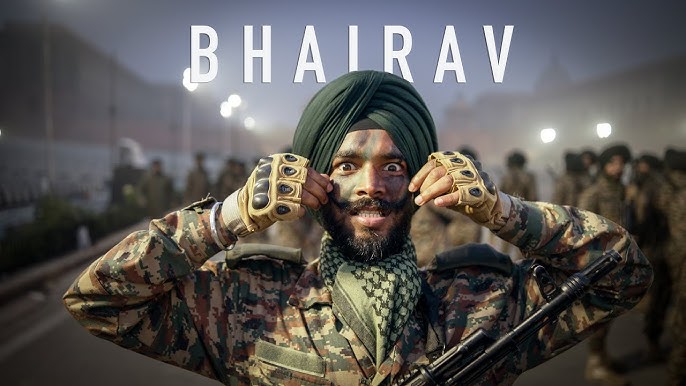
The Indian Army continues to modernise its combat structure to meet evolving security challenges. In this direction, a significant development is the raising of the 16th Bhairav Battalion at the Maratha Light Infantry Regimental Centre (MLIRC) in Belagavi, Karnataka. This move reflects India’s strategic shift toward agile, high-mobility, and technology-integrated warfare.
This topic is highly relevant for UPSC aspirants under GS Paper 3 (Internal Security & Defence) and Current Affairs.
What is the Bhairav Battalion?
The Bhairav Battalion is a newly conceptualised elite light commando unit of the Indian Army designed for rapid-response, high-impact operations. It is part of the Army’s effort to bridge the gap between conventional infantry and Special Forces.
- These battalions are lean, mobile, and technologically equipped units
- Designed for swift, surprise, and precision-based missions
- Operate in hybrid warfare environments (combination of conventional + unconventional warfare)
Unlike Para Special Forces, which undertake deep strategic missions, Bhairav units are deployed closer to the frontline for tactical operations and immediate response.
Key Features of Bhairav Battalion
1. Compact and Highly Trained Force
Each Bhairav Battalion consists of approximately:
- ~250 soldiers
- Personnel drawn from infantry, artillery, air defence, and signals
This multi-domain composition ensures operational flexibility and integration.
2. High Mobility and Speed
- Designed for rapid deployment in conflict zones
- Capable of operating in mountains, deserts, forests, and urban terrains
- Focus on quick reaction and minimal response time
This is crucial for India’s multi-front security challenges, especially along borders.
3. Role in Hybrid Warfare
Bhairav Battalions are tailored for:
- Counter-terror operations
- Cross-border tactical strikes
- Drone-integrated warfare
- Intelligence-driven missions
They represent a shift toward network-centric and technology-enabled warfare.
4. “Son of the Soil” Concept
A unique feature is the recruitment model:
- Soldiers are selected from local regions where they will be deployed
- Provides better knowledge of terrain, language, and local conditions
This improves operational efficiency and intelligence gathering.
16th Bhairav Battalion: Key Highlights
The 16th Bhairav Battalion was:
- Raised on: 25 April 2026
- Location: Belagavi, Karnataka
- Regiment: Maratha Light Infantry
- Commissioned by: Brigadier Joydeep Mukherjee
The raising ceremony included the presentation of the battalion flag, marking its operational readiness.
Strategic Significance
1. Enhancing Rapid Response Capability
The 16th battalion strengthens India’s ability to:
- Respond quickly to border tensions
- Conduct short-duration, high-impact operations
- Reduce dependency on Special Forces for smaller missions
2. Boost to Infantry Modernization
The Indian Army is transitioning from:
- Heavy, static formations → light, agile units
Bhairav Battalions are central to this transformation.
3. Multi-Terrain Operational Readiness
India faces diverse geographical challenges:
- Himalayas (China border)
- Deserts (Pakistan border)
- Dense forests (Northeast)
The new battalion is optimized for operations in difficult terrain.
4. Strengthening Border Security
These battalions are deployed near sensitive borders to:
- Conduct surveillance and reconnaissance
- Neutralize threats quickly
- Support conventional forces
5. Reducing Operational Burden on Special Forces
Bhairav units act as an intermediate force, handling:
- Tactical missions
- Quick strikes
This allows Special Forces to focus on strategic and covert operations.
Comparison with Other Forces
| Feature | Bhairav Battalion | Para Special Forces | Regular Infantry |
|---|---|---|---|
| Role | Tactical rapid response | Strategic deep operations | Conventional warfare |
| Size | Small (~250 soldiers) | Small elite teams | Large units |
| Mobility | Very high | Extremely high | Moderate |
| Deployment | Near borders | Deep inside enemy territory | Defensive/offensive roles |
| Specialization | Hybrid warfare | Covert operations | General combat |
Evolution and Background
- Concept introduced as part of Army restructuring for future warfare
- First public appearance during Republic Day Parade 2026
- Rapid expansion indicates successful operational integration
The raising of multiple battalions (now including the 16th) shows the Army’s scalable model of specialized forces.
Challenges and Limitations
1. Resource Intensive
- Requires advanced training and equipment
- Integration of technology like drones increases costs
2. Coordination Complexity
- Multi-domain nature requires seamless coordination between units
3. Overlap with Existing Forces
- Clear distinction needed between:
- Ghatak platoons
- Bhairav Battalions
- Special Forces
Relevance for UPSC Examination
Prelims Focus
- Bhairav Battalion = Light Commando Unit
- Around 250 personnel
- Based on “Son of the Soil” concept
- Operates between infantry and Special Forces
Mains GS Paper 3 (Security)
Possible Questions:
- “Discuss the role of Bhairav Battalions in enhancing India’s border security.”
- “How is the Indian Army restructuring itself for future warfare?”
- “Evaluate the importance of high-mobility forces in modern warfare.”
Answer Writing Points
- Link with:
- Hybrid warfare
- Technological integration
- Border management
- Military modernization
Way Forward
To maximize effectiveness, India should:
- Invest in AI, drones, and surveillance systems
- Enhance jointness among armed forces
- Strengthen training in unconventional warfare
- Ensure indigenous defence production (Atmanirbhar Bharat)
Conclusion
The raising of the 16th Bhairav Battalion marks a significant milestone in the transformation of the Indian Army into a future-ready, agile, and technologically advanced force. These battalions represent the evolving doctrine of warfare where speed, precision, and adaptability are more critical than sheer numbers.
For UPSC aspirants, this topic exemplifies how India is adapting to 21st-century security challenges, making it an important area for both conceptual clarity and answer writing.
FAQs
1. What is the Bhairav Battalion of the Indian Army?
The Bhairav Battalion is a new-generation elite light commando unit designed for high-speed, high-impact and rapid-response operations in modern warfare scenarios.
2. Why was the Bhairav Battalion created?
It was created to bridge the gap between regular infantry and Special Forces, ensuring quick tactical responses without deploying elite Para SF units.
3. When and where was the 16th Bhairav Battalion raised?
The 16th Bhairav Battalion was raised on 25 April 2026 at the Maratha Light Infantry Regimental Centre, Belagavi (Karnataka).
4. Which regiment is associated with the 16th Bhairav Battalion?
It is associated with the Maratha Light Infantry, one of the oldest and most prestigious regiments of the Indian Army.
5. What is the strength of a Bhairav Battalion?
Each battalion consists of around 250 specially trained soldiers, making it smaller and more agile than a regular infantry battalion.
6. What types of operations do Bhairav Battalions perform?
They are designed for:
- Rapid response operations
- Counter-terrorism missions
- High-mobility warfare
- Precision strikes
- Border and tactical operations
7. How are Bhairav Battalions different from Special Forces?
- Special Forces (Para SF): Strategic deep missions
- Bhairav Battalions: Tactical, immediate-response missions near borders
They act as a middle layer between infantry and Special Forces.
8. What is the “Son of the Soil” concept in Bhairav Battalions?
Under this concept, soldiers are recruited from the same region where they are deployed, ensuring better knowledge of terrain, language, and local conditions.
9. What is the strategic importance of the 16th Bhairav Battalion?
It strengthens:
- India’s rapid deployment capability
- Operational readiness in difficult terrains
- Modern warfare preparedness
- Tactical flexibility in border areas
10. How do Bhairav Battalions contribute to modern warfare?
They are equipped and trained for:
- Hybrid warfare
- Drone-based operations
- Surveillance and reconnaissance
- Quick strike missions
This makes them suitable for future battlefield requirements.
11. How many Bhairav Battalions are planned by the Indian Army?
The Indian Army plans to raise around 23 Bhairav Battalions across different commands.
12. Why is the 16th Battalion significant for UPSC?
Because it reflects:
- Military modernization of India
- Shift toward agile and tech-enabled warfare
- Strengthening of border security strategy
About The Author
