
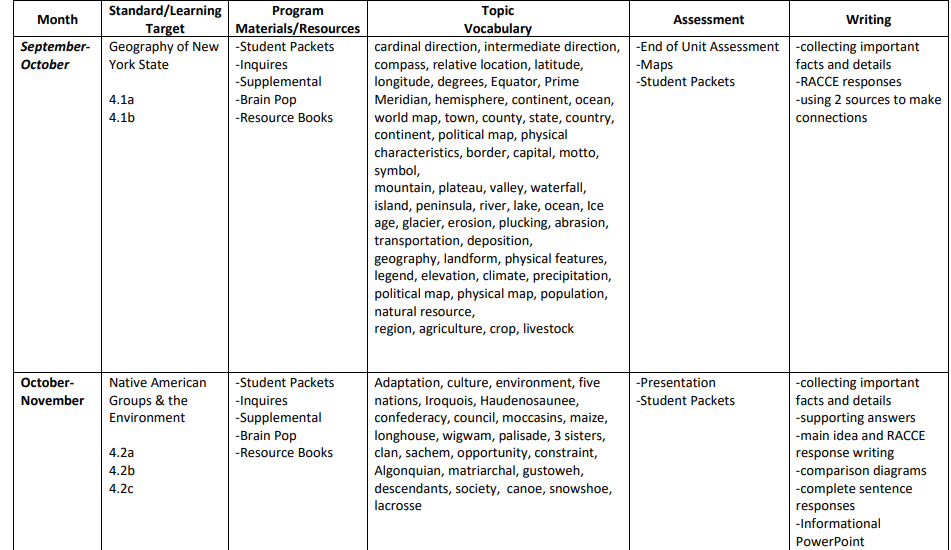
The Grade 4 Social Studies curriculum focuses heavily on state and national history, geography, civics, and economics. It also integrates key inquiry skills to help students think like historians and social scientists. Because there is no single national curriculum, the following detailed breakdown is based on a comprehensive set of standards adopted for 2026, providing a clear example of what a fourth-grade curriculum looks like.
Unit 1: Migration
Unit 2: Causes of the American Revolution
Unit 3: A New Nation
Unit 4: Regions of the United States
Key Curriculum Themes
The curriculum is built around major historical periods and concepts, blending content knowledge with the development of critical thinking skills.
-
The American Revolution: This is a major unit where students explore the causes and consequences of the war for independence. They examine key events like the Boston Tea Party, analyze the Declaration of Independence, and consider the conflict from multiple perspectives.
-
Westward Expansion & Migration: This theme focuses on the growth of the United States. Students learn about events like the Louisiana Purchase, the Lewis and Clark Expedition, and the impact of government policies like the Homestead Act on diverse groups of people, including Native Americans and settlers.
-
Immigration: Students investigate the push and pull factors that brought new immigrant groups to America, analyze where they settled, and compare the diverse experiences of different communities. The curriculum connects this to the evolving cultural makeup of the local community.
-
Financial Literacy (Spending Wisely): This practical unit helps students understand personal finance. They learn to identify factors influencing spending and saving, create a simple budget, and understand the importance of protecting their personal financial information.
A Skills-Focused Approach
These content themes are taught through a framework of Inquiry Standards, which emphasizes active investigation. Students are expected to:
-
Develop and refine questions to guide their research.
-
Gather, interpret, and evaluate information from primary and secondary sources.
-
Construct and support claims with evidence from their research.
-
Communicate their conclusions using reasoning, examples, and relevant details.
-
Identify civic engagement strategies that people use to advocate for causes.
US Grade 4 Social Studies Curriculum Standard Breakdown
The table below provides a more detailed look at the specific standards and topics for Iowa, which is a clear example of a 2026 curriculum.
| Unit / Theme | Specific Topics & Standard Focus |
|---|---|
| Inquiry Skills | Developing and refining questions; interpreting sources; making and supporting claims; constructing reasoned responses; and identifying strategies for civic advocacy. |
| The American Revolution | Explaining causes (e.g., new taxes); evaluating strategies of both sides; summarizing key principles of the Declaration of Independence; and describing perspectives of key individuals. |
| Westward Expansion / Migration | Explaining territorial additions (e.g., Louisiana Purchase); analyzing how expansion changed the landscape; describing effects of contact between different groups; and analyzing government policies on settlement. |
| Immigration | Identifying settlement patterns; analyzing push/pull factors; comparing experiences of different immigrant groups; and describing the diverse cultural makeup of the community. |
| Financial Literacy | Identifying factors influencing spending/saving choices; creating a simple budget; and explaining why it’s important to protect personal financial information. |
As the school year progresses, you can expect to see a continued emphasis on developing inquiry skills, with students using evidence from various sources to build and support their own conclusions about these historical events and economic principles.
🇺🇸 Grade 4 Social Studies Syllabus 2026
| Unit / Theme | Topics Covered | Learning Outcomes |
|---|---|---|
| 1. Geography of the United States | Maps, latitude & longitude, landforms, climate, natural resources | Understand map skills, identify regions, analyze how geography affects human life |
| 2. Regions of the United States | Northeast, Southeast, Midwest, Southwest, West | Compare regions based on culture, economy, environment |
| 3. U.S. History (Early America) | Native Americans, explorers, colonization, early settlements | Understand historical events and their impact on present society |
| 4. Government & Civics | Local, state, federal government, Constitution basics, citizenship | Learn rights & responsibilities of citizens, structure of government |
| 5. Economics | Goods & services, supply & demand, trade, personal finance basics | Understand basic economic concepts and decision-making |
| 6. Culture & Society | Immigration, traditions, diversity, communities | Appreciate cultural diversity and societal development |
| 7. Inquiry & Research Skills | Timelines, primary/secondary sources, critical thinking | Develop research, analysis, and reasoning skills |
Key Focus Areas
Geography & Regions
- Study of U.S. physical and human geography
- Understanding how the environment influences lifestyle
- Exploration of ecosystems, rivers, and resources
History
- Early American history and settlements
- Important people and events
- Cause-and-effect relationships in history
Civics & Government
- Structure of the U.S. government
- Role of citizens
- Rules, laws, and democracy
Economics
- Basic financial literacy
- Production, consumption, and trade
- Opportunity cost and decision-making
Skills Development
- Map reading & data interpretation
- Timeline understanding
- Critical thinking and research skills
Learning Objectives
By the end of Grade 4, students will:
- Understand U.S. geography and regions
- Explain basic government and civic responsibilities
- Analyze historical events and their impact
- Apply map and research skills
- Recognize economic and cultural diversity
Important Notes (2026 Context)
- The curriculum emphasizes critical thinking and inquiry-based learning
- Integration with ELA (reading & writing) is common
- Focus on real-world connections and citizenship skills
About The Author
