
The Railway Recruitment Board (RRB) Junior Engineer (JE) Exam 2025 is one of the most awaited recruitment drives conducted by the Indian Railways to fill technical posts across various engineering disciplines. Every year, thousands of aspirants with diplomas or degrees in engineering fields like Civil, Mechanical, Electrical, and Electronics appear for this competitive exam to secure a prestigious government job in the railways.
Railway RRB Junior Engineer Syllabus
The RRB JE Syllabus 2026 is designed to test candidates’ technical knowledge, logical reasoning, and general awareness. It is divided into two stages, CBT 1 (Computer-Based Test 1) and CBT 2 (Computer-Based Test 2). While CBT 1 focuses on subjects like Mathematics, General Intelligence & Reasoning, General Awareness, and General Science, CBT 2 emphasizes technical subjects related to the candidate’s engineering stream along with General Awareness and Basics of Environment & Pollution Control. Understanding the detailed syllabus is crucial for effective preparation and time management. Aspirants should thoroughly cover each topic to perform well in both stages of the exam. This article provides a comprehensive overview of the RRB JE Syllabus 2026, including subject-wise topics, exam pattern, and preparation tips to help candidates achieve success in the upcoming examination.
Detailed syllabus for RRB Junior Engineer (JE) 2026 (for all trades/engineering disciplines), covering CBT-1, CBT-2, and Technical Abilities sections. Use this as your roadmap to plan preparation discipline-wise.
Railway RRB Junior Engineer Exam Pattern 2026
| Stage | No. of Questions | Marks | Duration | Purpose / Notes |
|---|---|---|---|---|
| CBT-1 | 100 | 100 | 90 minutes | Screening exam; only to shortlist for CBT-2 |
| CBT-2 | 150 | 150 | 120 minutes | Final evaluation—marks counted in the final merit list |
Subject-wise breakdown for CBT-2:
-
General Awareness — 15 questions, 15 marks
-
Physics & Chemistry — 15 questions, 15 marks
-
Basics of Computers & Applications — 10 questions, 10 marks
-
Basics of Environment & Pollution Control — 10 questions, 10 marks
-
Technical Abilities (trade/discipline-specific) — 100 questions, 100 marks
Negative marking applies: ⅓ mark deducted for every wrong answer
Minimum qualifying marks often: UR = 40 %, OBC/SC = 30 %, ST = 25 % (as per past notifications)
Railway RRB Junior Engineer Syllabus 2026
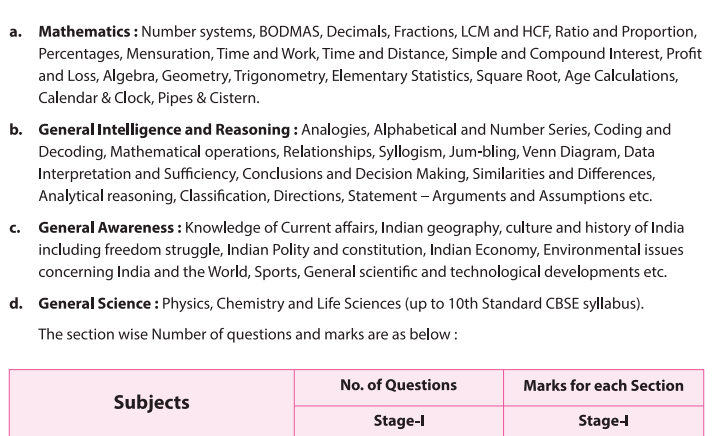
A. CBT-1: Common (for all candidates)
You must cover all these topics irrespective of your engineering discipline:
| Subject | Topics / Themes |
|---|---|
| Mathematics | Number Systems, BODMAS, Decimals & Fractions, LCM / HCF, Ratio & Proportion, Percentages, Mensuration, Time & Work, Time & Distance, Simple & Compound Interest, Profit & Loss, Algebra, Geometry, Trigonometry, Elementary Statistics, Square Root, Age Problems, Calendar & Clock, Pipes & Cisterns |
| General Intelligence & Reasoning | Analogies, Series (alphabetic, numeric), Coding & Decoding, Mathematical Operations, Relationships, Syllogism, Jumbling, Venn Diagrams, Data Interpretation & Sufficiency, Conclusions & Decision Making, Classification, Directions, Statement/Arguments/Assumptions, etc. |
| General Awareness | Current Affairs (national/international), Indian Geography, Indian History & Culture (including Freedom Struggle), Indian Polity & Constitution, Indian Economy, Environmental issues (India & world), Sports, General scientific & technological developments |
| General Science | Basics of Physics, Chemistry, Biology (as per 10th/CBSE level) |
Note: In many sources, CBT-1 is treated as qualifying only (i.e. its marks are not included in the final ranking) but it’s essential to clear it to move to CBT-2.
B. CBT-2: Common + Technical
In CBT-2, besides the general subjects, you will face a Technical Abilities section, which differs by trade (Civil, Mechanical, Electrical, Electronics, Computer/IT, CMA, etc.). First, here are the common sections:
| Subject | Topics / Themes |
|---|---|
| General Awareness | Same as in CBT-1 (Current affairs, India’s polity, economy, geography, environment, science & technology) |
| Physics & Chemistry | Class 10th / 12th level topics — mechanics, electricity & magnetism, laws of motion, optics, chemical reactions, atomic structure, periodic table etc. |
| Basics of Computers & Applications | Computer architecture, input/output devices, operating systems, MS Office (Word, Excel, PowerPoint), storage, networking, internet, web browsers, emails, computer viruses, basic programming concepts |
| Basics of Environment & Pollution Control | Environmental fundamentals, types & causes of pollution (air, water, noise), control strategies, waste management, global warming, acid rain, ozone depletion, environmental laws etc. |
Trade / Discipline: Technical Abilities Syllabus
Below is the technical syllabus (core engineering topics) organized by major trades commonly seen in RRB JE:
Civil & Allied Engineering
Main topics include:
-
Engineering Mechanics
-
Building Construction & Materials
-
Structural Analysis / Theory of Structures
-
Concrete Technology
-
Design of Steel & Concrete Structures
-
Geo-Technical Engineering
-
Surveying
-
Hydraulics & Irrigation Engineering
-
Transportation Engineering
-
Environmental Engineering (as applicable)
-
Building Drawing / CAD
-
Estimation, Costing & Specifications, Maintenance of structures
Mechanical & Allied Engineering
Important topics:
-
Engineering Mechanics (statics, dynamics)
-
Strength of Materials
-
Material Science / Metallurgy
-
Theory of Machines
-
Manufacturing Processes (machining, forming, joining, welding, grinding, finishing)
-
Metrology & Inspection
-
Fluid Mechanics & Hydraulic Machinery
-
Thermodynamics, Heat Transfer
-
Refrigeration & Air Conditioning
-
Industrial Engineering / Management
-
Machine Design
-
Power Engineering, IC Engines
Electrical Engineering
Topics generally include:
-
Basic Circuit Theory (Ohm’s law, Kirchhoff’s laws, network theorems, etc.)
-
AC Fundamentals and analysis
-
Magnetic Circuits
-
Measurement & Instrumentation
-
Electrical Machines (DC machines, induction motors, synchronous machines)
-
Power Systems (generation, transmission, distribution)
-
Estimation & Costing
-
Basic Electronics (semiconductors, diodes, transistors)
-
Utilization of Electrical Energy
-
Basic Control Systems (if in syllabus)
Electronics / Electronics & Communication
Typical topics:
-
Electronic Components & Materials
-
Analog & Digital Electronics
-
Linear Integrated Circuits
-
Microprocessor & Microcontroller
-
Electronic Measurements
-
Communication Systems & Networks
-
Signals & Systems
-
Power Electronics
-
Control Systems (if included)
-
Basic Electrical Engineering (as per overlap)
Computer / IT / Computer Science
Key areas usually are:
-
Data Structures & Algorithms (basic)
-
Operating Systems
-
Database Management Systems
-
Computer Networks
-
Programming (C, C++, Java, or Python basics)
-
Software Engineering fundamentals
-
Web Technologies
-
Computer Architecture & Organization
-
Digital Logic & Microprocessors
CMA / Chemical & Metallurgical
Because RRB also recruits for Chemical & Metallurgical Assistant / CMA, the syllabus for this branch typically includes:
-
Engineering Chemistry
-
Material Science & Metallurgy
-
Thermodynamics & Heat Transfer
-
Engineering Physics (mechanics, waves)
-
Welding, Foundry, Casting
-
Corrosion
-
Chemical Engineering Basics (Unit operations)
-
Instrumentation & Process Control
-
Basic Electrical / Mechanical principles (overlaps)
How to Use This Syllabus in Preparation
-
Identify your trade (Civil, Mechanical, Electrical, etc.) and focus heavily on the core technical topics for that trade.
-
First master the common sections (Mathematics, Reasoning, General Awareness, Science), since they apply to everyone.
-
Time allocation: In CBT-2, technical abilities carry the most weight (100 marks out of 150) — allocate at least ~60-70 % time to trade topics.
-
Use official past papers / mock tests to get familiar with question distribution and difficulty.
-
Revision & formula sheets: Maintain concise notes/formula sheets for core topics.
-
Stay updated in current affairs and environment topics for the General Awareness and Environment section.
Books to Complete the RRB Junior Engineer Syllabus 2026
Books for Mathematics
These books build calculation speed and concept clarity.
Recommended Books
-
Quantitative Aptitude – Best for fundamentals and practice
-
Fast Track Objective Arithmetic – Good for shortcut techniques
Topics Covered:
-
Percentage
-
Profit & Loss
-
Time & Work
-
Ratio & Proportion
-
Algebra
-
Trigonometry
Books for Reasoning
Recommended Books
-
A Modern Approach to Verbal and Non‑Verbal Reasoning
-
Analytical Reasoning
Topics Covered
-
Coding-decoding
-
Analogy
-
Blood relation
-
Series
-
Puzzle
Books for General Awareness & Science
Best Books
-
Lucent’s General Knowledge
-
Lucent’s General Science
-
Objective Computer Awareness
These cover:
-
History
-
Geography
-
Polity
-
Physics, Chemistry, Biology
-
Computer basics
FAQs
Q1. What is the selection process for RRB JE 2026?
The RRB JE selection process consists of four stages:
-
Computer Based Test (CBT 1)
-
Computer Based Test (CBT 2)
-
Document Verification
-
Medical Examination
Q2. What are the subjects included in RRB JE CBT 1?
The CBT 1 includes the following subjects:
-
Mathematics
-
General Intelligence and Reasoning
-
General Awareness
-
General Science
Q3. What is the syllabus for RRB JE CBT 2?
CBT 2 comprises:
-
General Awareness
-
Physics and Chemistry
-
Basics of Computers and Applications
-
Basics of Environment and Pollution Control
-
Technical Subjects (as per the chosen engineering discipline)
Q4. What is the marking scheme of the RRB JE exam?
-
Each question carries 1 mark.
-
Negative marking: 1/3 mark is deducted for each wrong answer.
Q5. How many questions are there in RRB JE CBT 1 and CBT 2?
-
CBT 1: 100 questions (90 minutes)
-
CBT 2: 150 questions (120 minutes)
Q6. What is the syllabus for the Technical Subjects in RRB JE CBT 2?
The technical syllabus depends on the engineering discipline chosen by the candidate, such as:
-
Civil Engineering
-
Mechanical Engineering
-
Electrical Engineering
-
Electronics Engineering
-
Computer Science & Information Technology
Each includes topics from diploma-level courses prescribed by AICTE.
Q7. Is the RRB JE syllabus same for all posts?
No, the Technical Subject section varies according to the post, but the Non-Technical sections (Maths, Reasoning, GA, Science, etc.) remain the same.
Q8. What are the important topics in Mathematics for RRB JE 2026?
-
Number Systems
-
Ratio and Proportion
-
Simple and Compound Interest
-
Time and Work
-
Profit and Loss
-
Geometry and Mensuration
-
Statistics and Probability
-
Algebra
Q9. How can I prepare for the General Awareness section?
Focus on:
-
Current Affairs (national & international)
-
Indian Polity and Constitution
-
Indian History and Geography
-
Economy
-
Railways-related facts
Q10. What is the difficulty level of RRB JE exam?
The exam level is moderate — based on diploma-level engineering knowledge and 10th–12th standard general subjects.
Q11. Is there any separate paper for each engineering stream?
Yes. In CBT 2, the Technical Subject section is stream-specific based on your qualification and post preference.
Q12. What books are best for RRB JE preparation?
-
Mathematics: R.S. Aggarwal – Quantitative Aptitude
-
Reasoning: Lucent’s Reasoning
-
General Awareness: Lucent’s GK + Monthly Current Affairs
-
Technical Subjects: Standard Diploma Books or Arihant RRB JE Technical Books
About The Author
