
US School Timing: Understanding school timing in the United States is important for parents, students, and educators—especially because schedules vary by state, district, and even individual schools. From early elementary classrooms to college lecture halls, the American education system follows flexible yet structured time patterns designed to balance academics, extracurricular activities, and student well-being.
US School Timing: Overview of the US Education Schedule
The United States does not have a single nationwide school timing system. Instead, each state and local school district decides its own daily schedule. However, there are general patterns followed across the country:
- School Year Duration: Typically 180 days
- Academic Year: August/September to May/June
- Weekdays: Monday to Friday
- Weekend: Saturday & Sunday (off)
US Primary School Timing (Elementary School)
Typical Schedule
- Start Time: 7:30 AM – 9:00 AM
- End Time: 2:00 PM – 3:30 PM
- School Hours: 6 to 7 hours/day
Daily Structure
- Morning assembly or homeroom
- Core subjects (Math, English, Science)
- Lunch break (30–45 minutes)
- Recess (playtime)
- Art, music, or physical education
Key Features
- Younger students start earlier than older students in many districts
- Focus on foundational skills and social development
- Regular breaks to maintain attention span
US Middle School Timing (Grades 6–8)
Typical Schedule
- Start Time: 8:00 AM – 9:00 AM
- End Time: 3:00 PM – 4:00 PM
- School Hours: 6.5 to 7.5 hours/day
Daily Structure
- Period-based schedule (6–8 classes/day)
- Subjects include Math, English, Science, Social Studies
- Electives (art, music, foreign languages)
- Lunch and short breaks
Key Features
- Transition phase between elementary and high school
- Increased academic responsibility
- Introduction to extracurricular activities
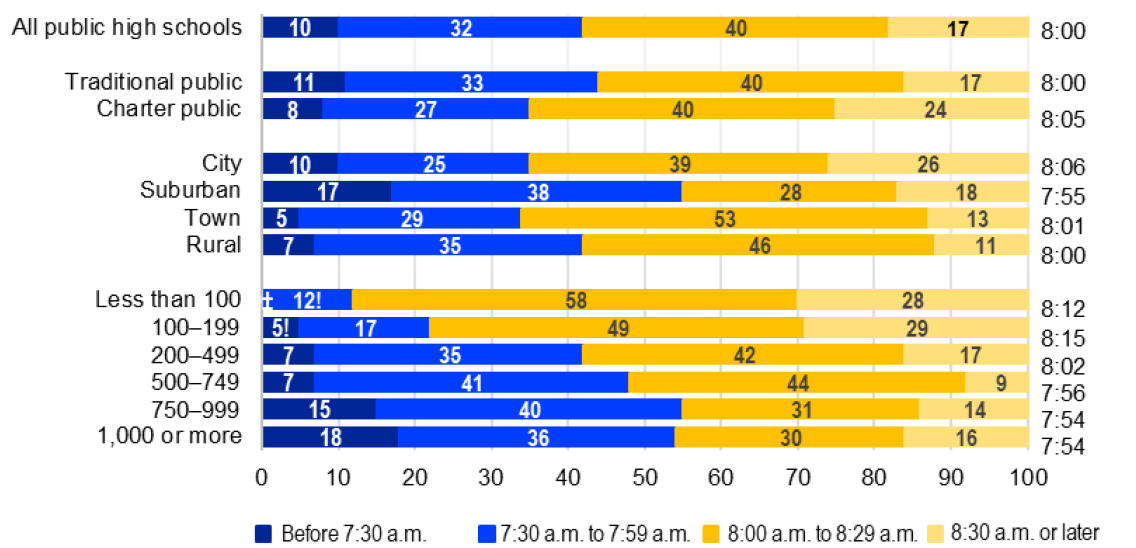
US High School Timing (Grades 9–12)
Typical Schedule
- Start Time: 8:00 AM – 9:30 AM
- End Time: 3:00 PM – 4:30 PM
- School Hours: 7 to 8 hours/day
Daily Structure
- 6–8 class periods (45–90 minutes each)
- Core subjects + electives (business, technology, arts)
- Lunch break
- After-school activities (sports, clubs, tutoring)
Key Features
- Some schools follow block scheduling (fewer but longer classes)
- Focus on college preparation and career readiness
- Flexible course selection
College / University Schedule (Higher Education)
Typical Schedule
- Class Timing: 8:00 AM – 8:00 PM (varies widely)
- Class Duration: 50 minutes to 3 hours
- Days: Flexible (2–5 days/week depending on courses)
Daily Structure
- No fixed daily schedule
- Students choose courses and timings
- Mix of lectures, labs, seminars
- Independent study and assignments
Key Features
- Highly flexible timetable
- Gap hours between classes
- Evening and online classes available
State-wise Variations in School Timing
Although timing differs across states like California, Texas, New York, and Florida, the variations are usually minor:
- Northern States: Slightly later start in winter months
- Southern States: Earlier start due to heat and daylight
- Urban Schools: Longer hours with more extracurricular options
- Rural Schools: Adjusted timing for transportation
Why School Timings Differ in the US
Several factors influence school schedules:
- Transportation (school buses)
- Climate and daylight hours
- Student age and sleep research
- District policies
- Extracurricular programs
State-wise Comparison of US School Timing
Below is a simplified comparison table of typical school timings across major US states. Note that exact schedules vary by district, but these ranges reflect common patterns followed in each state.
| State | Primary School Timing | Middle School Timing | High School Timing | Key Highlights |
|---|---|---|---|---|
| California | 8:00 AM – 2:30 PM | 8:30 AM – 3:00 PM | 8:30 AM – 3:30 PM | Balanced schedule, strong extracurricular culture |
| Texas | 7:30 AM – 3:00 PM | 8:00 AM – 3:30 PM | 8:30 AM – 4:00 PM | Earlier start due to hot climate |
| New York | 8:30 AM – 2:45 PM | 8:00 AM – 3:00 PM | 8:00 AM – 3:30 PM | Urban schools may have extended hours |
| Florida | 7:45 AM – 2:00 PM | 8:30 AM – 3:30 PM | 9:00 AM – 4:00 PM | Later high school start (teen sleep policy) |
| Illinois | 8:15 AM – 2:45 PM | 8:00 AM – 3:00 PM | 8:00 AM – 3:15 PM | Cold weather influences slight delays |
| Pennsylvania | 8:30 AM – 3:00 PM | 8:00 AM – 3:00 PM | 7:30 AM – 2:30 PM | Early high school timings common |
| Ohio | 8:00 AM – 2:30 PM | 7:45 AM – 2:45 PM | 7:30 AM – 2:30 PM | Traditional early schedule system |
| Georgia | 7:30 AM – 2:30 PM | 8:00 AM – 3:15 PM | 8:30 AM – 3:30 PM | Staggered timings for bus transport |
| North Carolina | 7:45 AM – 2:45 PM | 8:00 AM – 3:00 PM | 8:30 AM – 3:30 PM | Balanced timing across levels |
| Michigan | 8:30 AM – 3:30 PM | 8:00 AM – 3:00 PM | 7:30 AM – 2:30 PM | Early high school start trend |
| New Jersey | 8:30 AM – 3:00 PM | 8:00 AM – 3:00 PM | 7:45 AM – 2:45 PM | Dense districts, compact schedules |
| Virginia | 8:00 AM – 2:30 PM | 8:30 AM – 3:30 PM | 9:00 AM – 4:00 PM | Later start for high school students |
| Washington | 8:30 AM – 3:00 PM | 9:00 AM – 3:30 PM | 8:30 AM – 3:30 PM | Progressive timing policies |
| Arizona | 7:30 AM – 2:00 PM | 8:00 AM – 3:00 PM | 8:30 AM – 3:30 PM | Early start due to extreme heat |
| Massachusetts | 8:30 AM – 3:00 PM | 8:00 AM – 3:00 PM | 7:45 AM – 2:45 PM | Academic-focused schedules |
Key Insights from State-wise Comparison
- Early Start States: Texas, Arizona, Georgia (due to weather and transportation)
- Late Start High Schools: Florida, Virginia, Washington (based on adolescent sleep research)
- Traditional Timing States: Ohio, Pennsylvania, Michigan (early high school start)
- Balanced Schedules: California, North Carolina, Illinois
Conclusion
The US school timing system is flexible yet structured, catering to the needs of students at different stages. Primary schools emphasize early learning with shorter hours, middle schools introduce structured periods, high schools prepare students for future careers, and colleges offer complete scheduling freedom. While timings vary across states, the core objective remains the same—providing a balanced and effective learning environment.
About The Author

Brajesh
Brajesh (MCA, M.Tech (IT)) is a passionate education and career content creator with a strong academic background in Computer Applications (MCA) and Technology (M.Tech). With years of hands-on experience in exam preparation strategies, syllabus analysis, and government job updates, he helps students and aspirants navigate their academic and professional journeys with clarity and confidence.