
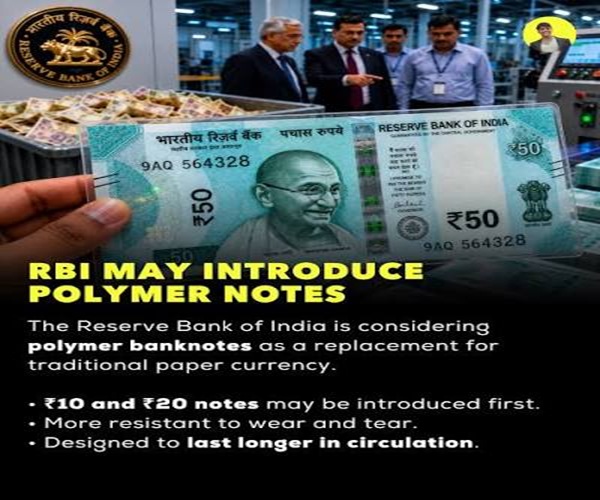
New Money: India could soon witness a major transformation in its currency system, as the Reserve Bank of India (RBI) is preparing to introduce plastic (polymer) currency notes, starting with ₹10 and ₹20 denominations. This move, if implemented, will mark one of the biggest changes in Indian currency design and durability in decades.
New Money- What Is the Latest Update?
Recent developments indicate that RBI has initiated preparations for a pilot project to introduce polymer banknotes.
- The pilot is likely to begin with ₹10 and ₹20 notes, which are widely used in daily transactions.
- RBI’s currency-printing arm has already invited global bids to supply polymer materials.
- The rollout could begin as early as next year, depending on trial results and approvals.
Importantly, this is currently a pilot phase, not a full replacement of existing paper currency.
Why Is India Shifting to Plastic Currency?
The idea of polymer notes is not new globally. Countries like Australia, Canada, and the UK already use them. India is exploring this shift for several strong reasons:
1. Longer Lifespan
Polymer notes last 2–3 times longer than traditional paper notes, reducing replacement costs.
2. Better Security
Plastic notes can include advanced anti-counterfeiting features, making them harder to fake.
3. Resistance to Damage
Unlike paper currency, polymer notes are:
- Water-resistant
- Tear-resistant
- Less likely to get dirty or soiled
4. Cost Efficiency
Frequent replacement of small denomination notes (₹10, ₹20) is expensive. Polymer notes can significantly reduce printing and circulation costs.
India may get Rs 10 and 20 plastic currency notes from next year
The RBI has chosen ₹10 and ₹20 notes for the pilot because:
- These notes are used heavily in daily transactions
- They wear out faster than higher denominations
- Replacing them frequently increases operational costs
By testing polymer in these denominations first, RBI can evaluate durability, public acceptance, and logistics before expanding further.
Will Paper Notes Be Discontinued?
No—at least not immediately.
- Paper and polymer notes are expected to coexist initially.
- There is no official announcement about completely replacing all paper currency.
- Existing notes will remain legal tender.
How Are Indian Notes Currently Made?
At present, Indian banknotes are printed on cotton-based paper with multiple security features like watermarks, threads, and microprinting.
The RBI is the sole authority responsible for issuing and managing currency in India.
Global Trend: Polymer Currency
Many countries have already adopted polymer notes due to their benefits:
- Australia – First country to introduce polymer notes
- Canada & UK – Fully transitioned to plastic currency
- Singapore – Uses hybrid and polymer systems
India’s move aligns with this global shift toward durable and secure currency systems.
Important Clarification
There have been viral claims about immediate replacement of all notes, but these are false.
- RBI is only testing polymer notes through a pilot project
- Any nationwide rollout will depend on successful trials and public feedback
What Happens Next?
If the pilot succeeds, India may:
- Expand polymer notes to other denominations (₹50, ₹100, etc.)
- Gradually reduce dependence on paper notes
- Improve currency durability and reduce costs
However, the timeline for full implementation is not yet confirmed.
Conclusion
The possible introduction of ₹10 and ₹20 plastic currency notes represents a modern step in India’s financial evolution. While the change will begin with a small pilot, it has the potential to reshape how Indians use cash—making it cleaner, stronger, and more secure.
For now, keep using your existing notes as usual—but don’t be surprised if your wallet soon includes sleek, plastic rupee notes!
About The Author
