
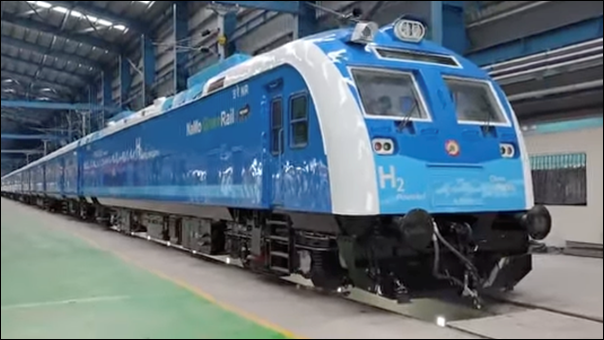
India’s First Hydrogen Powered Train: India is entering a new era of clean and sustainable transportation with the introduction of its first hydrogen-powered train. Developed under the vision of “Green Railways” by Indian Railways, this initiative aims to reduce carbon emissions and modernize rail infrastructure using cutting-edge technology.
India’s First Hydrogen Powered Train
India developed its first hydrogen-powered train through a combination of indigenous engineering, clean energy technology, and new infrastructure. Here’s a simple, step-by-step explanation of how India made it.
1. Indigenous Design & Development
- The project was led by Indian Railways with technical specifications from the Research Design & Standards Organisation (RDSO).
- The train was designed and manufactured in India, supporting the Atmanirbhar Bharat (self-reliant India) initiative.
- It is a 10-coach train set (2 power cars + 8 passenger coaches).
This means India didn’t import the train—it built its own hydrogen technology system from scratch.
2. Use of Hydrogen Fuel Cell Technology
- Instead of diesel engines, the train uses a hydrogen fuel cell system.
- Working principle:
Hydrogen + Oxygen → Electricity + Water Vapour - Key components inside the train:
- Hydrogen storage cylinders
- Fuel cells (generate electricity)
- Batteries (store extra energy)
The electricity produced powers the train motors—so no smoke, no pollution.
3. Green Hydrogen Production in India
- A hydrogen production plant was set up at Jind (Haryana).
- Hydrogen is produced using electrolysis of water (splitting water into hydrogen & oxygen).
- The fuel is:
- Stored at high pressure
- Supplied through a dedicated refueling station
This creates a complete ecosystem: production → storage → supply → train operation.
4. High-Power Engineering
- Each power car generates about 1200 kW, total 2400 kW power.
- Speed: up to 110 km/h (design), currently around 75 km/h (pilot)
- Range: around 250–350 km per refill
This makes it one of the most powerful hydrogen trains globally.
5. Safety Systems
- Advanced safety features include:
- Hydrogen leak detectors
- Fire & heat sensors
- High-pressure storage systems
- Approved by safety authorities for passenger use
Safety was a major focus because hydrogen is highly flammable.
6. Pilot Testing & Launch
- Tested and launched on the Jind–Sonipat route (Haryana)
- Officially inaugurated in July 2026
- Can carry around 2,600 passengers
This is a pilot project to test real-world performance before expansion.
7. Why India Built It
- Reduce dependence on diesel trains
- Cut carbon emissions (only water vapor released)
- Support India’s green energy & net-zero goals
Development Summary
India made its first hydrogen-powered train by:
- Designing it domestically
- Using hydrogen fuel cell technology
- Building a green hydrogen plant
- Creating refueling infrastructure
- Testing it on real railway routes
It is a major step toward clean, sustainable, and future-ready rail transport.
What is a Hydrogen-Powered Train?
A hydrogen-powered train uses hydrogen fuel cells instead of diesel engines. These fuel cells convert hydrogen gas into electricity, which powers the train.
How It Works:
- Hydrogen is stored in tanks on the train
- Fuel cells convert hydrogen + oxygen into electricity
- Electricity drives the motors
- The only emission is water vapor (H₂O)
This makes hydrogen trains zero-emission and eco-friendly
Key Features of India’s Hydrogen Train
India’s hydrogen train is designed with advanced features to match global standards:
Eco-Friendly Technology
- Zero carbon emissions
- Reduces dependence on fossil fuels
High Efficiency
- Better energy efficiency than diesel engines
- Suitable for non-electrified routes
Modern Passenger Experience
- Comfortable seating and improved interiors
- Reduced noise and vibration
Indigenous Development
- Developed under the “Make in India” initiative
- Built by Indian engineers and railway units
Safety Measures & Technology
Safety is a top priority in hydrogen-based transport systems.
Key Safety Features:
- High-strength hydrogen storage tanks (leak-proof & explosion-resistant)
- Real-time leak detection sensors
- Automatic shutdown systems in case of emergencies
- Fire suppression systems for onboard safety
- Rigorous testing under Indian climatic conditions
Hydrogen is lighter than air, so in case of leakage, it disperses quickly—reducing fire risk.
Proposed Route in India
The first hydrogen-powered train in India is expected to run on:
Kalka–Shimla Heritage Route
- Located in Himachal Pradesh
- Operated by Indian Railways
- A UNESCO-listed heritage mountain railway
Why This Route?
- Short distance, ideal for pilot testing
- Eco-sensitive hilly region
- Tourism-heavy corridor
Global Context & Significance
India joins a growing list of countries adopting hydrogen rail technology.
Global Leaders:
- Germany – First operational hydrogen trains
- France – Developing hydrogen fleets
- China – Testing hydrogen locomotives
Why It Matters:
- Supports India’s net-zero carbon goals
- Reduces diesel consumption
- Positions India as a leader in green mobility
- Encourages innovation in renewable energy
Challenges & Future Scope
Challenges:
- High initial cost of hydrogen infrastructure
- Need for hydrogen production and storage systems
- Limited refueling stations
Future Opportunities:
- Expansion to other non-electrified routes
- Integration with renewable hydrogen (green hydrogen)
- Export potential of indigenous technology
Conclusion
India’s first hydrogen-powered train marks a major milestone in sustainable transportation. With zero emissions, advanced safety features, and global relevance, this initiative by Indian Railways reflects the country’s commitment to a cleaner future.
As hydrogen technology evolves, it has the potential to revolutionize rail travel—not just in India, but across the world.
About The Author
