
The Chaitanya Bharathi Institute of Technology (CBIT), Hyderabad, follows a structured and industry-aligned curriculum designed as per AICTE model guidelines and institutional regulations (R22, R22(A), R23, etc.). The CBIT Syllabus 2026 covers a wide range of undergraduate (UG) and postgraduate (PG) programs, including engineering, management, and computer applications.
The syllabus is semester-based and focuses on theoretical knowledge, practical skills, projects, and industry exposure, ensuring students are job-ready and research-oriented.
CBIT UG Syllabus 2026 (B.E / B.Tech Programs)
List of UG Courses
CBIT offers multiple undergraduate engineering programs such as:
- Computer Science and Engineering (CSE)
- Artificial Intelligence & Machine Learning (AI & ML)
- Artificial Intelligence & Data Science (AI & DS)
- Information Technology (IT)
- Electronics & Communication Engineering (ECE)
- Electrical & Electronics Engineering (EEE)
- Mechanical Engineering
- Civil Engineering
- Chemical Engineering
- Biotechnology
UG Syllabus Structure (Semester-wise)
The UG syllabus is divided into 8 semesters (4 years) under regulations like R22/R22(A).
1st Year (Common for All Branches)
- Engineering Mathematics I & II
- Engineering Physics / Chemistry
- Basic Electrical & Electronics Engineering
- Programming for Problem Solving (C/Python)
- Engineering Graphics
- Communication Skills Lab
2nd Year (Core Foundation Subjects)
- Data Structures
- Digital Logic Design
- Object-Oriented Programming
- Signals & Systems / Mechanics (branch-specific)
- Probability & Statistics
- Environmental Science
3rd Year (Advanced Core + Electives)
- Database Management Systems
- Operating Systems
- Microprocessors / Control Systems
- Software Engineering
- Open Electives
- Mini Projects
4th Year (Specialization + Projects)
- Professional Electives (AI, Cloud, VLSI, etc.)
- Industrial Internship
- Major Project
- Seminar / Technical Presentation
Key Features of UG Curriculum
- CBCS (Choice Based Credit System)
- Industry-oriented electives (AI, IoT, Data Science)
- Mandatory internships & projects
- Skill-based labs and workshops
CBIT PG Syllabus 2026 (M.Tech, MBA, MCA)
List of PG Courses
CBIT offers various postgraduate programs such as:
- MBA (Master of Business Administration)
- MCA (Master of Computer Applications)
- M.Tech (CSE, AI & DS, IT, etc.)
- M.E (Civil, Mechanical, ECE, EEE specializations)
PG Syllabus Structure
The PG syllabus follows R23, R20, and updated schemes with 4 semesters (2 years).
1st Year PG (Core + Advanced Concepts)
- Advanced Data Structures / Algorithms
- Research Methodology
- Management Principles (MBA)
- Advanced Engineering Subjects
- Lab Work
2nd Year PG (Specialization + Research)
- Program Electives (AI, Robotics, VLSI, etc.)
- Dissertation / Thesis
- Internship / Industry Project
- Seminar
Key Features of PG Curriculum
- Research-oriented syllabus
- Industry collaboration projects
- Advanced electives in emerging technologies
- Thesis and publication opportunities
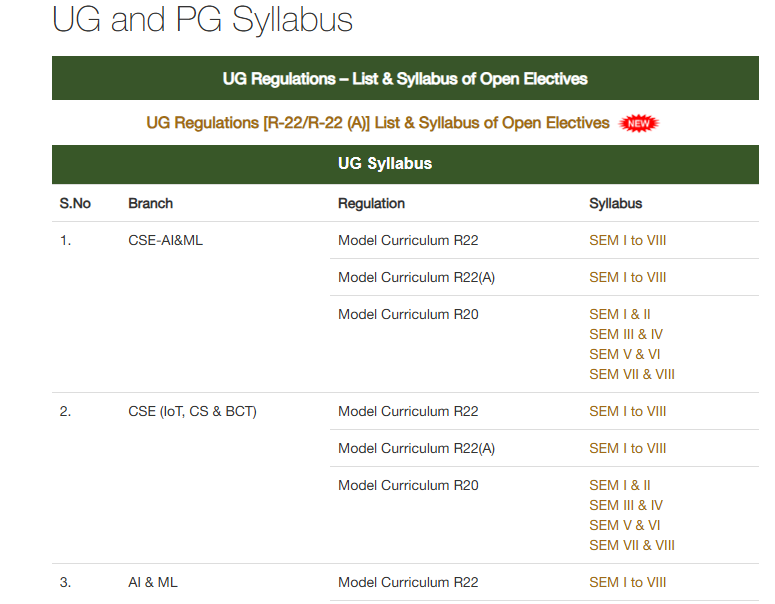
CBIT UG and PG Syllabus 2026 PDF Link
Check the detailed UG and PG syllabus by clicking on the link below:
https://www.cbit.ac.in/current_students/ug-and-pg-syllabus-structure/
CBIT Branch-wise Detailed Syllabus 2026
branch-wise detailed syllabus breakdown for CBIT 2026 (UG – B.Tech) based on official curriculum structures (R22/R22(A)/R23). The syllabus is semester-based (I–VIII) and includes core subjects, labs, electives, and projects.
CSE (Computer Science & Engineering)
Core Subjects (Year-wise)
1st Year (Common Engineering Foundation)
- Engineering Mathematics I & II
- Engineering Physics / Chemistry
- Programming (C / Python)
- Basic Electrical Engineering
- Engineering Graphics
- Communication Skills
2nd Year (Core CS Foundation)
- Data Structures
- Object-Oriented Programming (Java/C++)
- Digital Logic Design
- Discrete Mathematics
- Probability & Statistics
- Computer Organization
3rd Year (Advanced Computing)
- Operating Systems
- Database Management Systems
- Computer Networks
- Software Engineering
- Compiler Design
- Machine Learning / AI (intro)
4th Year (Specialization + Industry Focus)
- Artificial Intelligence
- Cloud Computing
- Cyber Security
- Blockchain / Big Data
- Open Electives
- Major Project + Internship
ECE (Electronics & Communication Engineering)
Core Subjects
1st Year (Common)
- Mathematics, Physics
- Programming + Basic Electronics
2nd Year (Electronics Basics)
- Electronic Devices & Circuits
- Analog Electronics
- Digital Electronics
- Signals & Systems
- Network Theory
3rd Year (Communication + Embedded Systems)
- Communication Systems
- Microprocessors & Microcontrollers
- Control Systems
- VLSI Design
- Digital Signal Processing
4th Year (Advanced + Specialization)
- Wireless Communication
- Embedded Systems
- IoT
- Advanced VLSI / Signal Processing
- Project Work + Internship
CBIT ECE syllabus includes SEM I–VIII structured curriculum under R22/R22(A).
EEE (Electrical & Electronics Engineering)
Core Subjects
2nd Year
- Electrical Circuits
- Electrical Machines I
- Analog Electronics
- Electromagnetic Fields
3rd Year
- Power Systems
- Control Systems
- Power Electronics
- Measurements & Instrumentation
4th Year
- Renewable Energy Systems
- Smart Grid
- High Voltage Engineering
- Project + Internship
Programming & Data Structures is also taught in early semesters across branches.
Civil Engineering
Core Subjects
2nd Year
- Engineering Mechanics
- Strength of Materials
- Surveying
- Fluid Mechanics
3rd Year
- Structural Analysis
- Geotechnical Engineering
- Environmental Engineering
- Transportation Engineering
4th Year
- Design of Structures
- Construction Planning
- Advanced Structural Engineering
- Major Project
Mechanical Engineering
Core Subjects
2nd Year
- Engineering Mechanics
- Thermodynamics
- Fluid Mechanics
- Materials Science
3rd Year
- Heat Transfer
- Manufacturing Technology
- Machine Design
- Dynamics of Machines
4th Year
- CAD/CAM
- Robotics
- Industrial Engineering
- Project Work
AI, Data Science & Emerging Branches
Subjects
- Python Programming
- Data Structures
- Machine Learning
- Deep Learning
- Data Analytics
- Big Data Technologies
- AI Applications
CBIT offers specialized branches like AI & ML, AI & DS, IoT, Cyber Security under updated curriculum.
Evaluation Pattern (CBIT 2026)
- Internal Assessment: 30–40%
- Semester End Exams: 60–70%
- Practical/Lab Exams
- Project Evaluation
Important Notes
- CBIT updates syllabus periodically (R20 → R22 → R23)
- Each branch has detailed semester-wise PDFs available
- Open electives allow interdisciplinary learning
Conclusion
The CBIT Syllabus 2026 is designed to meet modern industry requirements by combining strong theoretical foundations, practical exposure, and emerging technology domains. Whether pursuing UG or PG courses, students benefit from a flexible curriculum, hands-on learning, and career-oriented training, making CBIT one of the top engineering institutions in Telangana.
About The Author
