
The Andhra Pradesh Public Service Commission (APPSC) has released the recruitment notification for Hostel Welfare Officer Grade-II posts under Notification No. 25/2026. Candidates preparing for this recruitment should understand the examination pattern, subject-wise syllabus, marking scheme, and important topics before starting their preparation.
The APPSC Hostel Welfare Officer examination is an important opportunity for candidates interested in working in the state’s Social Welfare, Tribal Welfare, and Backward Classes Welfare departments. A well-planned preparation strategy can help aspirants cover the prescribed subjects without wasting time on irrelevant topics.
In this article, candidates can check the APPSC Hostel Welfare Officer Syllabus 2026, the expected structure of the written examination based on the previous scheme, important topics for each paper, preparation tips, and the official website for checking the latest syllabus PDF.
Important: Candidates should refer to the detailed Notification No. 25/2026 before relying on older examination schemes. Previous recruitment notifications may contain a different subject level or examination structure.
APPSC Hostel Welfare Officer Syllabus 2026: Overview
| Particulars | Details |
|---|---|
| Recruiting authority | Andhra Pradesh Public Service Commission |
| Post name | Hostel Welfare Officer Grade-II |
| Notification number | 25/2026 |
| Recruitment type | Direct recruitment |
| Departments | Social Welfare, Tribal Welfare and Backward Classes Welfare |
| Examination mode | Check the detailed notification |
| Selection process | As specified in the official notification |
| Exam pattern | Refer to the 2026 scheme and syllabus |
| Official website | psc.ap.gov.in |
Candidates should download the detailed notification and syllabus from the official APPSC website to verify the applicable exam scheme, eligibility conditions, and selection procedure.
APPSC Hostel Welfare Officer Latest Exam Pattern 2026
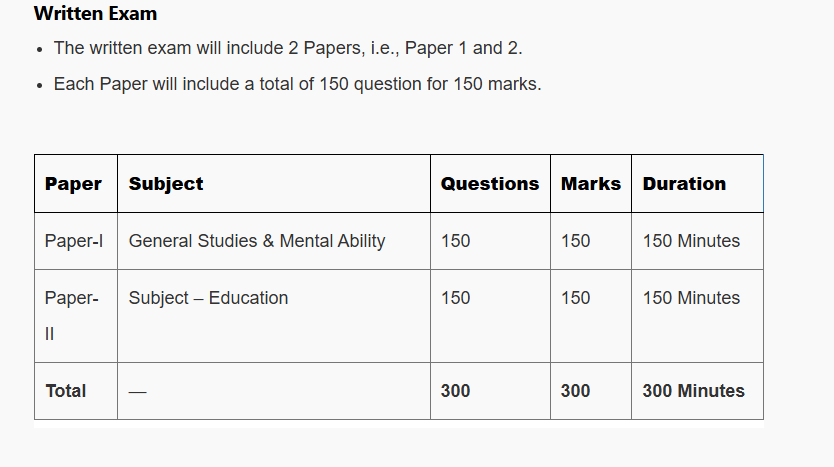
The examination pattern helps candidates understand the number of papers, total marks, duration, and subjects they need to prepare. The previous APPSC Hostel Welfare Officer Grade-II recruitment scheme used an objective-type written examination consisting of two papers: General Studies and Mental Ability and Education.
The earlier scheme provided 150 questions for each paper, with 150 marks per paper and 150 minutes for each paper. However, candidates applying under Notification No. 25/2026 should confirm whether these details have been retained in the latest notification.
Previous examination scheme
| Paper | Subject | Questions | Maximum marks | Duration |
|---|---|---|---|---|
| Paper I | General Studies and Mental Ability | 150 | 150 | 150 minutes |
| Paper II | Education | 150 | 150 | 150 minutes |
| Total | Two papers | 300 | 300 | 300 minutes |
Note: This table reflects the previous recruitment scheme, not a confirmed final pattern for Notification No. 25/2026. Candidates must verify the current scheme before planning their examination strategy.
Negative marking
The previous scheme specified a penalty of one-third of the marks assigned to a question for each incorrect answer in objective-type papers. Aspirants should check the 2026 notification to confirm the current negative-marking rule.
If negative marking applies, avoid random guessing. Practise eliminating clearly incorrect options and attempt questions strategically.
APPSC Hostel Welfare Officer Syllabus 2026: Paper-Wise Topics
The following sections explain the major topics covered under the previous syllabus. They are useful for understanding the examination’s subject areas, but the final preparation checklist should be matched against the official 2026 syllabus.
Paper I: General Studies and Mental Ability
Paper I covers current affairs, general knowledge, Andhra Pradesh-related developments, Indian polity, economy, geography, science, and analytical ability. Candidates should prepare both factual information and conceptual topics.
1. Current Affairs
Current affairs can help candidates strengthen their preparation for questions related to recent events at the state, national, and international levels.
Important areas include:
- National and international events
- Andhra Pradesh government schemes and policies
- Important appointments and resignations
- Awards and honours
- Sports events and achievements
- Important reports, rankings, and indexes
- Science and technology developments
- Important government initiatives
- Summits, conferences, and international relations
Candidates should regularly read reliable news sources and revise monthly current-affairs notes. Give particular attention to developments related to Andhra Pradesh.
2. General Science and Science & Technology
This section tests basic scientific knowledge and awareness of developments that affect everyday life.
| Subject | Important topics |
|---|---|
| Physics | Motion, force, energy, heat, light, electricity and magnetism |
| Chemistry | Elements, compounds, acids, bases, metals and non-metals |
| Biology | Human body, nutrition, diseases, cells and basic physiology |
| Science and technology | Space research, biotechnology, information technology and recent innovations |
| Everyday science | Scientific principles behind common phenomena |
Focus on fundamental concepts rather than unnecessarily advanced scientific theories. Practising objective questions can help improve accuracy.
3. Indian History and the Freedom Movement
Candidates should develop a clear understanding of modern Indian history and the major events that shaped the country.
Important topics include:
- Social and religious reform movements
- British expansion and colonial administration
- Revolt of 1857
- Formation of the Indian National Congress
- Major phases of the national movement
- Non-Cooperation Movement
- Civil Disobedience Movement
- Quit India Movement
- Important freedom fighters
- Independence and its consequences
Also revise the social, economic, and political history of Andhra Pradesh wherever specified in the official syllabus.
4. Indian Polity and Constitution
This section covers the constitutional framework and functioning of government institutions.
| Topic | What to study |
|---|---|
| Constitution | Historical background, features and the Preamble |
| Fundamental Rights | Rights guaranteed by the Constitution |
| Directive Principles | Objectives and guiding principles |
| Fundamental Duties | Constitutional duties of citizens |
| Parliament | Lok Sabha, Rajya Sabha and legislative procedures |
| Executive | President, Prime Minister, Governor and Chief Minister |
| Judiciary | Supreme Court and High Courts |
| Federal structure | Centre-state relations |
| Local government | Panchayati Raj and urban local bodies |
| Governance | Public policy, administrative reforms and e-governance |
Give special attention to Andhra Pradesh’s administration and governance when these topics are included in the applicable syllabus.
5. Indian and Andhra Pradesh Economy
Candidates should understand basic economic concepts and the major factors influencing economic development.
Important topics include:
- Indian economy since independence
- National income and economic growth
- Inflation and unemployment
- Poverty and inclusive development
- Banking and financial institutions
- Agriculture and rural development
- Industrial development
- Government budgets and taxation
- Welfare programmes
- Andhra Pradesh’s economy and development
- Economic and administrative implications of the state’s bifurcation
Prepare short notes on key economic terms, government initiatives, and major state-level developments.
6. Geography of India and Andhra Pradesh
Geography questions may cover physical features, natural resources, climate, agriculture, and population.
Important topics include:
- Physical divisions of India
- Mountains, plateaus, plains and rivers
- Climate and monsoon
- Soil types and natural vegetation
- Agriculture and irrigation
- Mineral and energy resources
- Population distribution and migration
- Natural resources of Andhra Pradesh
- Major rivers, irrigation projects and coastal features of Andhra Pradesh
- Natural disasters and their effects
Maps can be particularly useful for remembering rivers, geographical regions, and important locations.
7. Environment and Disaster Management
Environmental awareness and disaster management are important areas of general studies.
Prepare the following topics:
- Ecosystems and biodiversity
- Air, water and soil pollution
- Climate change and global warming
- Conservation of natural resources
- Sustainable development
- Environmental protection initiatives
- Floods, cyclones, droughts and earthquakes
- Disaster preparedness and response
- Prevention and mitigation strategies
- Remote sensing and GIS applications in disaster assessment, where prescribed
Understand the difference between disaster prevention, preparedness, response, and recovery.
8. Logical Reasoning and Mental Ability
This section tests logical thinking, numerical ability, and the interpretation of information.
| Topic | Important question types |
|---|---|
| Number series | Missing numbers and numerical patterns |
| Coding-decoding | Letter and number codes |
| Analogy | Word, number and relationship-based analogies |
| Classification | Identifying the odd item |
| Direction sense | Distance and direction problems |
| Blood relations | Family relationships |
| Ranking and ordering | Position-based questions |
| Syllogisms | Logical conclusions |
| Data interpretation | Tables, charts and graphs |
| Basic statistics | Mean, median, mode and related concepts where prescribed |
| Arithmetic | Percentages, ratios, averages and basic calculations |
Practise questions regularly and analyse mistakes after each mock test. Accuracy and time management are equally important.
9. Data Analysis and Interpretation
The previous syllabus also included data-analysis topics. Aspirants should practise interpreting numerical information rather than simply memorising formulas.
Key areas include:
- Tabulation of data
- Visual representation of data
- Bar graphs and pie charts
- Tables and numerical comparisons
- Mean, median and mode
- Variance and coefficient of variation, where prescribed
- Drawing conclusions from statistical information
Start with simple tables and charts before moving to questions involving multiple calculations.
Paper II: Education
The Education paper is a core subject area in the previous APPSC Hostel Welfare Officer examination scheme. It covers educational foundations, psychology, teaching and learning, and other areas associated with education.
The previous recruitment syllabus used a degree-standard Education paper. Candidates must check the 2026 notification to establish the prescribed subject level and exact list of topics.
1. Foundations of Education
This section focuses on the philosophical and sociological foundations of education.
Important topics include:
- Nature and scope of education
- Relationship between philosophy and education
- Philosophical foundations of education
- Idealism, naturalism and pragmatism
- Realism and existentialism
- Educational ideas of Mahatma Gandhi
- Rabindranath Tagore’s educational philosophy
- Sri Aurobindo’s educational ideas
- Swami Vivekananda’s views on education
- Jiddu Krishnamurti’s educational philosophy
- Education and social change
- Education and culture
- Socialisation and education
- Equality of educational opportunities
- Education of disadvantaged and weaker sections
Candidates should prepare each philosopher’s central ideas, educational objectives, and views on teaching and learning.
2. Educational Psychology
Educational psychology explains how students learn, develop, think, and respond to different teaching methods.
Important topics include:
- Meaning, nature and scope of educational psychology
- Methods of studying educational behaviour
- Principles of growth and development
- Stages of development: infancy, childhood and adolescence
- Physical, mental, social and emotional development
- Individual differences
- Intelligence and creativity
- Learning theories
- Motivation and attention
- Memory and forgetting
- Personality and adjustment
- Factors influencing learning
- Educational implications of child development
Pay special attention to the practical application of psychological principles in classrooms and student support.
3. Teaching and Learning
Teaching and learning topics help candidates understand how educational objectives can be achieved effectively.
Areas to revise include:
- Principles of teaching
- Teaching methods and strategies
- Learner-centred education
- Classroom interaction
- Teaching aids and instructional materials
- Lesson planning
- Learning objectives
- Assessment of learning
- Remedial teaching
- Individual differences in learning
- Classroom management
- Inclusive teaching practices
For each teaching method, learn its main features, advantages, limitations, and appropriate classroom applications.
4. Educational Assessment and Evaluation
Assessment is used to measure student learning and identify areas that require improvement.
Important topics include:
- Meaning and purpose of assessment
- Measurement and evaluation
- Formative and summative assessment
- Diagnostic testing
- Achievement tests
- Types of evaluation
- Test construction
- Reliability and validity
- Interpretation of test results
- Feedback and remedial instruction
Understand how assessment can support student progress rather than being used only to assign marks.
5. Inclusive Education and Educational Equity
Hostel Welfare Officers work in settings where student welfare and access to education are important. The relevant educational topics may include the needs of disadvantaged students and the importance of equal educational opportunities.
Prepare topics such as:
- Equality and equity in education
- Education of weaker sections
- Barriers to educational access
- Inclusive learning environments
- Individual differences among learners
- Social and cultural influences on education
- Student participation and retention
- The role of educational institutions in promoting equal opportunities
Study the exact topics listed in the official syllabus instead of assuming that every welfare-related topic will necessarily be tested.
APPSC Hostel Welfare Officer Syllabus 2026: Preparation Strategy
Preparing for a competitive examination becomes easier when the syllabus is divided into manageable sections. Instead of trying to study every subject at once, candidates should build their preparation around the prescribed topics and revise them regularly.
1. Understand the official syllabus first
Download the syllabus associated with Notification No. 25/2026 and compare it with the previous syllabus. Mark the topics that are unchanged, newly introduced, or removed. This will help you avoid spending too much time on topics that are not part of the current examination.
2. Follow a practical daily timetable
Candidates can use the following sample timetable and adjust it according to their available study hours.
| Study activity | Suggested time |
|---|---|
| General Studies and current affairs | 1 hour |
| Education subject | 2 hours |
| Reasoning and data interpretation | 45 minutes |
| Practice questions | 45 minutes |
| Revision | 30 minutes |
| Total | 5 hours |
Candidates who have limited time can reduce the duration while maintaining consistency. The important thing is to study every major subject regularly.
3. Solve previous question papers
Previous papers help candidates understand question styles, recurring concepts, and the level of difficulty. Practise papers from earlier Hostel Welfare Officer recruitments, but remember that the subject level and exam scheme may differ between notifications.
After solving a paper, review incorrect answers and revise the concepts behind them.
4. Take mock tests
Mock tests are useful for developing speed, accuracy, and time management. Once you have completed the basics of a subject, attempt a timed test and assess your performance.
Keep a record of your scores and identify the topics where you repeatedly make mistakes.
5. Revise regularly
Make short notes for constitutional provisions, important historical events, educational philosophers, learning theories, and current affairs. Revise these notes every week rather than waiting until the final days before the examination.
Best Books for APPSC Hostel Welfare Officer Preparation
The following resources can help candidates cover the major subject areas. Always match the material with the official 2026 syllabus before purchasing books.
| Subject | Recommended resources |
|---|---|
| General Studies | A standard Indian general knowledge book and NCERT textbooks |
| Indian Polity | Indian Polity by M. Laxmikanth |
| Indian History | NCERT History textbooks and a standard modern Indian history reference |
| Geography | NCERT Geography textbooks and an atlas |
| Economy | NCERT Economics textbooks and basic Indian economy material |
| General Science | NCERT Science textbooks |
| Reasoning | A standard verbal and non-verbal reasoning practice book |
| Education | Degree-level Education textbooks covering foundations, psychology, teaching and evaluation |
| Current Affairs | Reliable newspapers and monthly current-affairs compilations |
For Paper II, a single general knowledge book will not be sufficient if the official examination requires degree-standard knowledge of Education. Use subject-specific textbooks and practise objective questions from each prescribed unit.
How to Download APPSC Hostel Welfare Officer Syllabus 2026 PDF
Candidates should obtain the latest syllabus from the official commission website rather than relying solely on coaching websites or old PDFs.
Follow these steps:
- Visit the official APPSC website.
- Open the Notifications or Schemes and Syllabus section.
- Find Notification No. 25/2026 for Hostel Welfare Officer Grade-II.
- Open the detailed notification and check the examination scheme and syllabus annexures.
- Download the relevant PDF and save it for future reference.
- Verify the subjects, marks, duration, and negative-marking rules before beginning preparation.
The commission’s official website is the primary source for recruitment updates. Its syllabus section also contains schemes and syllabi for other APPSC examinations.
Important Tips to Score Well in the Examination
- Complete the official syllabus before concentrating exclusively on mock tests.
- Give sufficient time to Education, as it is a specialised subject in the previous examination scheme.
- Keep up with Andhra Pradesh current affairs and state government initiatives.
- Practise reasoning and data interpretation to improve speed.
- Revise important educational philosophers and learning theories.
- Do not ignore the marking scheme; negative marking can affect the final score if applicable.
- Check the official website for corrigenda, revised syllabi, examination dates, and hall-ticket updates.
APPSC Hostel Welfare Officer Syllabus 2026: FAQs
1. Where can I download the APPSC Hostel Welfare Officer Syllabus 2026?
Candidates can visit the official APPSC website at psc.ap.gov.in and look for Notification No. 25/2026 and its examination-scheme and syllabus details.
2. How many papers were included in the previous APPSC Hostel Welfare Officer exam pattern?
The previous scheme contained two objective-type papers: Paper I, General Studies and Mental Ability, and Paper II, Education.
3. What was the total number of marks in the previous examination scheme?
The previous scheme provided 150 marks for each paper, giving a total of 300 marks. Candidates should verify the current notification before treating this as the confirmed 2026 pattern.
4. Is there negative marking in the APPSC Hostel Welfare Officer examination?
The previous scheme specified a penalty of one-third of the marks assigned to a question for each incorrect answer. The applicable rule for Notification No. 25/2026 should be confirmed from the latest detailed notification.
5. What subjects should candidates prepare for Paper I?
The previous syllabus covered General Studies and Mental Ability, including current affairs, science and technology, history, polity, economy, geography, environment, disaster management, reasoning, and data interpretation.
6. What is covered in the Education paper?
The previous Education syllabus included foundations of education and educational psychology, along with related education topics. Candidates should follow the exact subject units and academic level prescribed in the 2026 syllabus.
7. Are previous-year question papers useful for preparation?
Yes. They help candidates understand the style and difficulty of questions. However, aspirants should use older papers alongside the latest syllabus because examination schemes can change.
8. Has the APPSC Hostel Welfare Officer Syllabus 2026 been officially confirmed?
APPSC has published the detailed recruitment notification for Hostel Welfare Officer Grade II under Notification No. 25/2026. Candidates should consult the corresponding official document to confirm the final syllabus and examination pattern applicable to this recruitment.
Conclusion
The APPSC Hostel Welfare Officer Syllabus 2026 should be the starting point for every candidate preparing for this recruitment. General Studies, Mental Ability, and Education are important areas in the previous examination scheme, but aspirants must confirm the precise subject list and marks distribution in the latest notification.
Download the official syllabus, prepare a realistic timetable, practise previous papers, and revise consistently. A focused preparation strategy will help you cover the required topics systematically and approach the examination with greater confidence.
About The Author
