
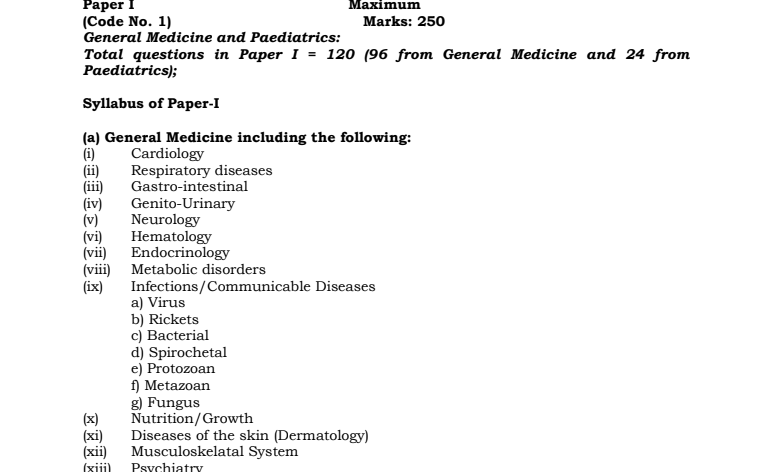
UPSC CMS Syllabus 2026: The UPSC Combined Medical Services (CMS) Examination 2026 is one of the most important national-level exams for medical graduates in India. Conducted by the Union Public Service Commission (UPSC), this exam recruits doctors for various central government services. Understanding the syllabus for Paper 1 and Paper 2 is crucial for effective preparation. This article provides a detailed breakdown of both papers along with subject-wise topics and guidance for downloading the syllabus PDF.
Overview of UPSC CMS Exam 2026
The UPSC CMS Exam is conducted in two stages: a written examination (Paper 1 and Paper 2) followed by a personality test (interview). Each paper is objective-type (MCQs) and carries 250 marks, making a total of 500 marks for the written stage. The questions are based on MBBS-level knowledge, making conceptual clarity extremely important. Candidates must prepare thoroughly across clinical, pre-clinical, and para-clinical subjects.
UPSC CMS Syllabus 2026 for Paper 1
Paper 1 focuses mainly on General Medicine and Pediatrics, testing candidates on core clinical knowledge. This paper evaluates diagnostic understanding, disease management, and theoretical medical concepts. The syllabus is designed to assess a candidate’s ability to apply medical knowledge in practical scenarios. It includes both theoretical and case-based questions.
General Medicine
General Medicine forms the major portion of Paper 1 and covers a wide range of diseases and clinical conditions. Candidates are expected to have a strong grasp of diagnosis, treatment protocols, and patient management. Questions often test conceptual clarity and real-life application. Topics are aligned with standard MBBS curriculum.
- Cardiology (Heart diseases, hypertension, ECG interpretation)
- Respiratory diseases (Asthma, COPD, tuberculosis)
- Gastrointestinal system (Liver disorders, ulcers, infections)
- Neurology (Stroke, epilepsy, neuropathies)
- Endocrinology (Diabetes, thyroid disorders)
- Hematology (Anemia, blood disorders)
- Infectious diseases (Malaria, dengue, HIV/AIDS)
Pediatrics
Pediatrics focuses on child health, development, and diseases affecting infants and children. Candidates must understand growth milestones, immunization schedules, and pediatric emergencies. Questions are often practical and scenario-based. Emphasis is on preventive and clinical pediatrics.
- Growth and development
- Neonatal care and common disorders
- Immunization and vaccines
- Nutritional deficiencies
- Pediatric infections and diseases
- Congenital disorders
- Pediatric emergencies
UPSC CMS Syllabus 2026 for Paper 2
Paper 2 includes Surgery, Gynecology & Obstetrics, and Preventive & Social Medicine (PSM). This paper evaluates surgical knowledge, reproductive health, and public health awareness. It emphasizes both theoretical understanding and practical application. Candidates must prepare multiple disciplines in an integrated manner.
Surgery
Surgery covers principles, diagnosis, and management of surgical conditions. Candidates are expected to understand operative procedures, trauma care, and surgical emergencies. Questions may include clinical case scenarios and decision-making situations. Basic surgical instruments and techniques are also important.
- General surgery principles
- Wound healing and infections
- Trauma and emergency care
- Orthopedics (Fractures, bone diseases)
- ENT and ophthalmology basics
- Urology and neurosurgery basics
- Anesthesia and post-operative care
Gynecology & Obstetrics
This section focuses on women’s reproductive health, pregnancy, and childbirth. Candidates must understand both normal and complicated pregnancies. Questions test knowledge of diagnosis, treatment, and maternal care. Clinical application and case-based questions are common.
- Pregnancy and antenatal care
- Labor and delivery
- Postnatal care
- Gynecological disorders
- Family planning methods
- Infertility and reproductive health
- Obstetric emergencies
Preventive & Social Medicine (PSM)
PSM emphasizes public health, epidemiology, and disease prevention strategies. This section is crucial for understanding healthcare systems and national health programs. Questions often relate to statistics, health policies, and community medicine. Candidates must focus on both theory and application.
- Epidemiology and biostatistics
- National health programs
- Environmental health
- Nutrition and health education
- Communicable and non-communicable diseases
- Occupational health
- Demography and health indicators
UPSC CMS Exam Pattern 2026
The written exam consists of two papers, each of 2 hours duration. Both papers contain objective-type multiple-choice questions. Each paper carries 250 marks, and there is a negative marking for incorrect answers. Candidates who qualify in the written exam are called for the personality test, which carries 100 marks.
UPSC CMS Syllabus 2026 (Paper 1 & Paper 2)
As per the official structure, the written exam consists of 2 papers (250 marks each) covering 5 core medical subjects.
Paper 1: General Medicine & Paediatrics
| Section | Topics / Subjects | Detailed Syllabus |
|---|---|---|
| General Medicine | Core Clinical Subjects | Cardiology, Respiratory Diseases, Gastrointestinal System, Genito-Urinary System |
| Neurology & Psychiatry | Neurology, Psychiatry (Depression, Anxiety, Psychosis, Bipolar Disorder) | |
| Endocrine & Metabolic | Endocrinology, Metabolic Disorders, Vitamin Deficiency Diseases | |
| Infectious Diseases | Bacterial, Viral, Fungal, Protozoal, Parasitic Diseases | |
| General & Emergency | Emergency Medicine, Critical Care, Common Poisoning, Snake Bite | |
| Other Topics | Dermatology, Musculoskeletal System, Nutrition & Growth, Tropical Medicine | |
| Applied Concepts | Pathophysiology, Medical Procedures, Vaccine & Non-vaccine Preventable Diseases | |
| Paediatrics | Child Health Basics | Normal Development Milestones, Newborn Care |
| Pediatric Care | Immunization, Childhood Diseases | |
| Emergencies | Common Childhood Emergencies, Accidents & Poisoning | |
| Special Conditions | Birth Defects, Autism, Children with Special Needs | |
| Public Health | National Child Health Programs |
Key Insight: Paper 1 mainly focuses on clinical medicine + child healthcare, with major weightage to General Medicine.
Paper 2: Surgery, Gynaecology & Preventive Medicine
| Section | Topics / Subjects | Detailed Syllabus |
|---|---|---|
| General Surgery | Basic Surgery | Wounds, Infections, Tumors, Cysts, Lymphatic & Blood Vessels |
| Organ Systems | Alimentary Tract (Stomach, Intestines), Liver, Pancreas | |
| Surgical Specialties | ENT, Orthopedics, Ophthalmology, Neurosurgery, Urology | |
| Surgical Care | Pre & Post-operative Care, Trauma Management | |
| Physiology | Shock, Fluid & Electrolyte Balance, Wound Healing | |
| Gynaecology & Obstetrics | Obstetrics | Pregnancy, Labour, Postnatal Care |
| Gynaecology | Menstrual Disorders, Reproductive Health | |
| Family Welfare | Family Planning Methods, Maternal Health | |
| Preventive & Social Medicine (PSM) | Public Health | Epidemiology, Biostatistics |
| Diseases | Communicable & Non-communicable Diseases | |
| National Programs | Government Health Schemes & Policies | |
| Environment & Health | Nutrition, Sanitation, Environmental Health | |
| Health Education | Preventive Strategies, Community Medicine |
Key Insight: Paper 2 emphasizes surgical knowledge + public health + women’s health, with PSM often being a scoring and rank-deciding section.
Quick Summary
| Paper | Subjects | Marks | Focus Area |
|---|---|---|---|
| Paper 1 | General Medicine + Paediatrics | 250 | Clinical Medicine & Child Health |
| Paper 2 | Surgery + Gynaecology + PSM | 250 | Surgery, Public Health, Women’s Health |
Important Points
- Total Written Marks: 500
- Mode: Computer-Based Test (MCQs)
- Negative Marking: 1/3rd marks deducted for wrong answers
- Interview (Personality Test): 100 marks
UPSC CMS Topic-wise Weightage Analysis 2026
Topic-wise weightage analysis of UPSC CMS 2026 (Paper 1 & Paper 2) based on previous year trends + exam pattern data
Paper 1: General Medicine & Paediatrics
| Subject / Topic | Approx Weightage | Expected Questions | Key Focus Areas |
|---|---|---|---|
| General Medicine | 60–65% | 70–80 | Cardiology, Respiratory, GIT, Neurology, Infectious diseases, Emergency medicine |
| Paediatrics | 25–30% | 30–35 | Immunization, Growth milestones, Neonatology, Nutrition |
| Dermatology | 5–8% | 5–10 | Skin infections, Leprosy, Drug reactions |
| Psychiatry | 3–5% | 3–6 | Depression, Anxiety, Psychosis |
Trend Insight:
- General Medicine alone contributes more than half of Paper 1, making it the most important subject.
- Paediatrics is high scoring due to predictable topics like vaccines & milestones.
Paper 1 (Micro Topic Breakdown – High Yield)
| Topic | Weightage within Medicine | Importance Level |
|---|---|---|
| Cardiology | High | ⭐⭐⭐⭐⭐ |
| Infectious Diseases | High | ⭐⭐⭐⭐⭐ |
| Respiratory System | Moderate–High | ⭐⭐⭐⭐ |
| Neurology | Moderate | ⭐⭐⭐⭐ |
| Endocrinology | Moderate | ⭐⭐⭐ |
| Emergency Medicine | Moderate | ⭐⭐⭐⭐ |
Exam Pattern Tip: Clinical case-based questions dominate → focus on diagnosis + treatment.
Paper 2: Surgery, OBG & PSM
| Subject / Topic | Approx Weightage | Expected Questions | Key Focus Areas |
|---|---|---|---|
| General Surgery (incl. ENT & Ophthalmology) | 35–40% | 45–50 | Trauma, GIT surgery, Urology, Orthopedics |
| Obstetrics & Gynaecology (OBG) | 30–35% | 25–30 | Pregnancy, Labour, Contraception, Gynec disorders |
| Preventive & Social Medicine (PSM) | 25–30% | 30–35 | Epidemiology, Biostatistics, National Programs |
| ENT & Ophthalmology | 5–8% | 5–10 | Cataract, Glaucoma, Ear infections |
Trend Insight:
- Surgery has the largest share, but
- PSM is the most scoring + rank-deciding subject due to factual questions.
Paper 2 (Micro Topic Breakdown – High Yield)
| Topic | Weightage within Surgery | Importance Level |
|---|---|---|
| Trauma & Emergency | High | ⭐⭐⭐⭐⭐ |
| GIT Surgery | High | ⭐⭐⭐⭐⭐ |
| Breast & Thyroid | Moderate | ⭐⭐⭐⭐ |
| Urology | Moderate | ⭐⭐⭐ |
| Orthopedics | Moderate | ⭐⭐⭐⭐ |
PSM High Yield Areas:
- Epidemiology formulas
- Screening tests (Sensitivity/Specificity)
- National Health Programs
- Vaccination schedules
Overall Subject Weightage (Both Papers Combined)
| Subject | Total Weightage |
|---|---|
| General Medicine | Highest (~35–40%) |
| Surgery | High (~20–25%) |
| PSM | High (~15–20%) |
| Paediatrics | Moderate (~15%) |
| OBG | Moderate (~10–15%) |
Based on PYQ trends, General Medicine + Surgery + PSM = ~70% of the exam.
Preparation Strategy Based on Weightage
First Priority: General Medicine + PSM
Second Priority: Surgery + Paediatrics
Third Priority: OBG + Minor subjects
Smart Strategy:
- Focus on clinical MCQs + PYQs
- Revise PSM formulas daily
- Practice case-based questions for Medicine & Surgery
Final Takeaway
- Paper 1 = Medicine dominated (60%+)
- Paper 2 = Balanced but PSM is scoring
- Top 3 rank-deciders:
General Medicine
Surgery
PSM
How to Download UPSC CMS Syllabus 2026 PDF
Candidates can download the official UPSC CMS Syllabus PDF from the UPSC website. The PDF contains detailed information about the exam pattern and subject-wise syllabus. It is advisable to keep a copy for regular reference during preparation. Follow the steps below to download the syllabus or from the direct link provided here UPSC CMS Syllabus PDF :
- Visit the official UPSC website (www.upsc.gov.in)
- Go to the “Examinations” section
- Click on “Active Examinations”
- Select “Combined Medical Services Examination 2026”
- Download the syllabus PDF from the notification link
Preparation Tips Based on UPSC CMS Syllabus
Understanding the syllabus is the first step toward effective preparation. Candidates should focus on conceptual clarity and revise standard MBBS textbooks. Practice previous year question papers to understand the exam pattern. Time management and regular mock tests are essential for success.
Conclusion
The UPSC CMS Syllabus 2026 for Paper 1 and Paper 2 is comprehensive and requires a strong foundation in medical sciences. Candidates must prepare strategically by covering all subjects thoroughly and practicing MCQs regularly. With proper planning and consistent effort, aspirants can successfully crack the exam. Downloading and following the official syllabus PDF will help streamline preparation and ensure complete coverage of topics.
About The Author
