
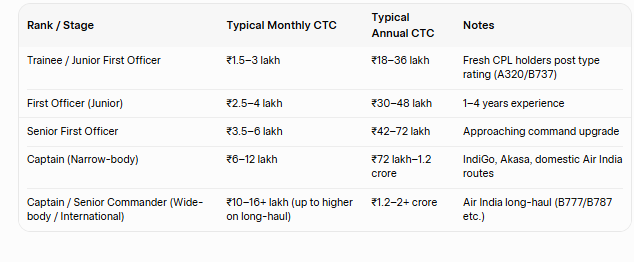
Pilot salaries in India in 2026 remain among the highest in the professional sector, driven by strong aviation growth, fleet expansion at major carriers, and ongoing demand for cockpit crew. Compensation varies significantly by rank (First Officer vs Captain), airline, aircraft type (narrow-body vs wide-body), flying hours, and experience. Figures below reflect approximate Cost-to-Company (CTC) ranges compiled from industry reports, airline pay scales, and recent updates as of mid-2026. Actual take-home (“in-hand”) pay is lower after taxes, provident fund, and other deductions.
Pilot Salary by Rank and Experience (2026)
| Rank / Stage | Typical Monthly CTC | Typical Annual CTC | Notes |
|---|---|---|---|
| Trainee / Junior First Officer | ₹1.5–3 lakh | ₹18–36 lakh | Fresh CPL holders post type rating (A320/B737) |
| First Officer (Junior) | ₹2.5–4 lakh | ₹30–48 lakh | 1–4 years experience |
| Senior First Officer | ₹3.5–6 lakh | ₹42–72 lakh | Approaching command upgrade |
| Captain (Narrow-body) | ₹6–12 lakh | ₹72 lakh–1.2 crore | IndiGo, Akasa, domestic Air India routes |
| Captain / Senior Commander (Wide-body / International) | ₹10–16+ lakh (up to higher on long-haul) | ₹1.2–2+ crore | Air India long-haul (B777/B787 etc.) |
Recent developments: In August 2026, Air India hiked pilot salaries by 8–17% (commanders receiving the highest increases). A senior commander flying around 55 hours could earn about ₹8.3 lakh (up from ₹7.5 lakh), while a first officer rose to around ₹3.3 lakh. Pay structures often include guaranteed minimum hours (e.g., 40 hours at Air India) plus higher rates beyond that, or fixed productivity-linked packages (e.g., around 70 hours at IndiGo).
Airline-Wise Pilot Salary Indicative Ranges (Monthly, Approximate CTC)
- IndiGo: First Officers ≈ ₹1.8–3.5 lakh; Captains ≈ ₹5–10/12 lakh. Fastest command upgrades due to large fleet and high utilization.
- Air India / Air India Express: First Officers ≈ ₹2–4+ lakh (higher post-hike); Domestic Captains ≈ ₹7–14 lakh; International/wide-body senior captains often higher with layover and other allowances.
- Akasa Air: First Officers ≈ ₹1.8–2.8 lakh; Captains ≈ ₹7–11 lakh.
- SpiceJet and regional carriers: Generally lower end of the ranges (FO ≈ ₹1.5–2.5 lakh; Captains ≈ ₹5–9 lakh).
International long-haul operations and wide-body aircraft command the highest packages due to longer sectors, higher allowances, and complexity.
What Makes Up a Pilot’s Pay?
Total earnings are not a simple fixed salary. Typical components include:
- Basic/fixed pay
- Flying hour / productivity allowance (often the largest variable portion; rates rise with hours flown)
- Night flying, layover/per diem, and international allowances
- Simulator / training pay, performance bonuses, and other perks
Allowances can form a substantial share of total CTC and influence take-home pay. Additional benefits commonly include free or heavily discounted standby tickets for self and family (e.g., around 12 per year at major airlines), medical coverage, and insurance.
In-Hand Pilot Pay 2026
Gross CTC figures are before deductions. In-hand pay is typically lower due to:
- Income tax (higher slabs apply at these earnings levels; effective rates often 20–30%+ after deductions and exemptions)
- Provident Fund (PF) and other statutory contributions
- Professional tax and any other withholdings
As a rough guide, in-hand can range from about 60–75% of gross depending on the exact mix of taxable vs. certain allowances, tax planning, and individual circumstances. Flying and layover allowances may receive different tax treatment in practice. Exact in-hand varies month to month with flying hours. High earners (senior captains) still take home several lakhs per month after tax.
Example illustration (approximate, not exact): A junior FO with ₹2.5 lakh gross might take home roughly ₹1.8–2.2 lakh depending on deductions and hours. A narrow-body captain at ₹8 lakh gross could retain ₹5.5–6.5+ lakh in-hand in many cases. Always verify with current tax rules and payslips, as structures differ by airline.
Career Progression and Timeline
- Years 0–2: Type rating + joining as FO (trainee/junior). Focus on building hours and experience.
- Years 3–7/8: Progression to senior FO. Command upgrade typically requires significant total flight hours (often several thousand), ATPL, and airline-specific checks. Timelines have shortened at expanding carriers like IndiGo (sometimes 5–8 years possible) but can stretch longer depending on attrition, fleet growth, and individual performance.
- Captain and beyond: Highest pay jump. Further increases come with seniority, wide-body transition, training/check roles (e.g., Type Rated Instructor, Designated Examiner), or international routes.
Training cost to reach CPL + type rating is substantial (often ₹50 lakh to ₹1 crore+ depending on pathway—India vs abroad), so early-career earnings must be viewed against this investment and the time to command.
Other Factors Affecting Pay
- Aircraft type: Narrow-body (A320/B737 family) vs wide-body.
- Domestic vs international: International routes usually pay more via allowances.
- Flying hours: Most packages reward higher utilization within regulatory limits.
- Airline financial health and competition: Pilot shortages and expansion drive periodic hikes (as seen with Air India in 2026). Competition from Gulf carriers also influences retention packages.
- Corporate/charter/private aviation: Can range from lower (smaller aircraft) to competitive or higher for heavy jets/VIP work, often with different schedules.
- Instructor roles: Flight instructors and check pilots often earn solid packages (roughly ₹1.5–6 lakh+ monthly depending on level).
Outlook for 2026 and Beyond
India’s aviation sector continues expanding, with major orders at IndiGo and Air India creating sustained demand for pilots. This supports upward pressure on salaries and relatively faster upgrades compared with some earlier periods. However, pay remains highly variable, and job security, roster quality, and work-life balance differ by airline and base.
Important caveats: All figures are approximate ranges drawn from publicly available industry sources, alumni data, and reported pay scales as of 2026. Actual offers depend on negotiation, exact experience, medical fitness, and current airline needs. Salaries can change with new wage agreements, economic conditions, or policy shifts. For the most accurate picture, consult current airline recruitment announcements, pilot associations, or recent joiners.
Aspiring pilots should factor in the high training investment, rigorous medical and regulatory requirements, irregular schedules, and long-term career trajectory when evaluating the profession. The financial rewards at senior levels are substantial, but the path requires sustained performance and commitment.
About The Author
