
29 States of India and Their Main Festivals List 2026: India is known for its diverse culture, traditions, and regional celebrations. Each state has several festivals that reflect its history, religion, agriculture, and local customs. Below is a state-wise list of the 29 Indian states and their major festivals, useful for students, competitive exams, and general knowledge.
Note: India currently has 28 states and 8 Union Territories. The list below uses the traditional 29-state format, which includes Jammu & Kashmir as a state for reference; Jammu & Kashmir has been a Union Territory since October 31, 2019.
States of India and Their Main Festivals
| No. | State | Main / Famous Festivals |
|---|---|---|
| 1 | Andhra Pradesh | Ugadi, Sankranti, Dussehra, Tirupati Brahmotsavam |
| 2 | Arunachal Pradesh | Losar, Solung, Nyokum, Si-Donyi |
| 3 | Assam | Bihu (Rongali, Bhogali, Kongali), Ambubachi Mela |
| 4 | Bihar | Chhath Puja, Sama-Chakeva, Makar Sankranti, Jitiya |
| 5 | Chhattisgarh | Bastar Dussehra, Hareli, Pola, Teeja |
| 6 | Goa | Goa Carnival, Shigmo, Christmas, Sao Joao |
| 7 | Gujarat | Navratri, Uttarayan, Janmashtami, Rann Utsav |
| 8 | Haryana | Baisakhi, Teej, Surajkund Mela, Lohri |
| 9 | Himachal Pradesh | Kullu Dussehra, Losar, Minjar Fair, Lavi Fair |
| 10 | Jammu & Kashmir* | Tulip Festival, Baisakhi, Herath, Lohri |
| 11 | Jharkhand | Sarhul, Karam, Sohrai, Tusu Parab |
| 12 | Karnataka | Mysore Dasara, Ugadi, Karaga, Hampi Utsav |
| 13 | Kerala | Onam, Vishu, Thrissur Pooram, Attukal Pongala |
| 14 | Madhya Pradesh | Khajuraho Dance Festival, Bhagoria, Tansen Samaroh, Malwa Utsav |
| 15 | Maharashtra | Ganesh Chaturthi, Gudi Padwa, Diwali, Dahi Handi |
| 16 | Manipur | Yaoshang, Ningol Chakouba, Lai Haraoba, Cheiraoba |
| 17 | Meghalaya | Wangala, Nongkrem Dance Festival, Shad Suk Mynsiem |
| 18 | Mizoram | Chapchar Kut, Mim Kut, Pawl Kut |
| 19 | Nagaland | Hornbill Festival, Moatsu, Sekrenyi, Tuluni |
| 20 | Odisha | Rath Yatra, Raja Parba, Nuakhai, Durga Puja |
| 21 | Punjab | Baisakhi, Lohri, Gurpurab, Hola Mohalla |
| 22 | Rajasthan | Gangaur, Teej, Pushkar Fair, Desert Festival |
| 23 | Sikkim | Losar, Losoong, Pang Lhabsol, Saga Dawa |
| 24 | Tamil Nadu | Pongal, Tamil New Year, Thaipusam, Jallikattu |
| 25 | Telangana | Bathukamma, Bonalu, Ugadi, Sammakka Saralamma Jatara |
| 26 | Tripura | Kharchi Puja, Garia Puja, Ker Puja, Durga Puja |
| 27 | Uttar Pradesh | Holi, Diwali, Kumbh/Ardh Kumbh, Janmashtami, Ram Navami |
| 28 | Uttarakhand | Nanda Devi Raj Jat, Harela, Phool Dei, Kumbh Mela |
| 29 | West Bengal | Durga Puja, Kali Puja, Poila Boishakh, Gangasagar Mela |
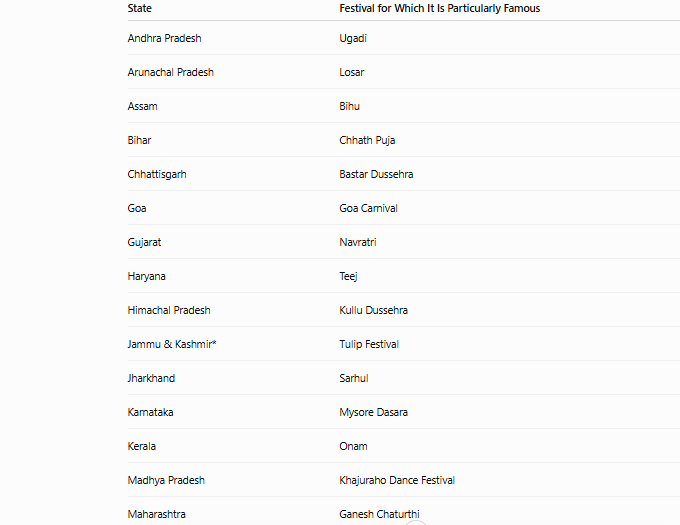
State-wise Famous Festivals at a Glance
| State | Festival for Which It Is Particularly Famous |
|---|---|
| Andhra Pradesh | Ugadi |
| Arunachal Pradesh | Losar |
| Assam | Bihu |
| Bihar | Chhath Puja |
| Chhattisgarh | Bastar Dussehra |
| Goa | Goa Carnival |
| Gujarat | Navratri |
| Haryana | Teej |
| Himachal Pradesh | Kullu Dussehra |
| Jammu & Kashmir* | Tulip Festival |
| Jharkhand | Sarhul |
| Karnataka | Mysore Dasara |
| Kerala | Onam |
| Madhya Pradesh | Khajuraho Dance Festival |
| Maharashtra | Ganesh Chaturthi |
| Manipur | Yaoshang |
| Meghalaya | Wangala |
| Mizoram | Chapchar Kut |
| Nagaland | Hornbill Festival |
| Odisha | Rath Yatra |
| Punjab | Baisakhi |
| Rajasthan | Gangaur |
| Sikkim | Losar |
| Tamil Nadu | Pongal |
| Telangana | Bathukamma |
| Tripura | Kharchi Puja |
| Uttar Pradesh | Holi / Kumbh Mela |
| Uttarakhand | Nanda Devi Raj Jat |
| West Bengal | Durga Puja |
29 States of India and Their Main Festivals List
(Note: As of 2026, India officially has 28 states and 8 Union Territories. The figure of 29 refers to an earlier count before the 2019 reorganisation of Jammu & Kashmir into Union Territories. This article covers the current 28 states.)
India’s cultural richness shines brightest through its festivals. Each state celebrates unique traditions tied to harvest cycles, mythology, tribal customs, and seasonal changes. While national festivals like Diwali, Holi, and Dussehra unite the country, regional celebrations define local identity. Here is a detailed look at the main festivals of India’s 28 states, with notes on their significance and approximate timing in 2026 where available.
Andhra Pradesh
Ugadi marks the Telugu New Year and is one of the most important festivals, falling around 19 March 2026. Families prepare special dishes like Ugadi Pachadi, which blends six tastes to symbolise life’s varied experiences. Makar Sankranti (Pongal) in mid-January features kite flying, cattle decoration, and traditional sweets. The Brahmotsavam at Tirumala temple draws millions of devotees with processions and rituals spanning several days. These celebrations highlight the state’s deep agricultural roots and temple traditions, bringing communities together in colourful festivity throughout the year.
Arunachal Pradesh
Losar, the Tibetan New Year celebrated mainly by Buddhist communities, involves prayers, dances, and family gatherings, usually in February or March. Solung is a major harvest festival of the Adi tribe featuring animal sacrifices, folk dances, and community feasts. Mopin, observed by the Galo tribe, focuses on agricultural prosperity with traditional dances and rice-beer offerings. Dree Festival in July is dedicated to deities for a good harvest and features unique rituals among the Apatani people. These tribal festivals showcase the state’s rich ethnic diversity and close connection to nature.
Assam
Bihu is the most iconic festival, celebrated three times a year. Bohag Bihu (Rongali Bihu) in mid-April marks the Assamese New Year and spring harvest with energetic Bihu dances, songs, and feasts. Magh Bihu (Bhogali Bihu) in January celebrates the end of the harvest with community bonfires and traditional foods. Kati Bihu in October involves lighting lamps in fields for crop protection. Other events like Ambubachi Mela at Kamakhya Temple add spiritual depth. Bihu remains the heartbeat of Assamese cultural identity.
Bihar
Chhath Puja stands as Bihar’s most distinctive festival, dedicated to the Sun God and Chhathi Maiya. Observed over four days in late October or early November 2026 (around early November), it involves rigorous fasting, standing in water bodies at sunrise and sunset, and offering thekua and fruits. The rituals emphasise purity, gratitude for the harvest, and family bonds. Sama-Chakeva and other local festivals also feature, but Chhath draws massive participation across the state and among Bihari communities nationwide. Its unique riverbank rituals create a powerful communal atmosphere.
Chhattisgarh
Bastar Dussehra is world-famous for lasting nearly 75 days, one of the longest festivals globally. In 2026 it began around 12 August with Pat Jatra rituals and peaks around October with processions honouring Goddess Danteshwari. Unlike the Ramayana-based Dussehra elsewhere, this tribal celebration focuses on local deities, chariot processions, and indigenous customs of the Bastar region. Madai and Hareli festivals also hold importance among tribal communities. Bastar Dussehra highlights Chhattisgarh’s unique tribal heritage and draws visitors seeking authentic cultural experiences.
Goa
Carnival, held just before Lent (usually February), features colourful parades, floats, music, and the King Momo procession, reflecting Portuguese influence blended with local culture. Shigmo, the spring festival, involves folk dances, processions, and traditional performances across villages. Sao Joao celebrates St. John the Baptist with water games and boat processions. These festivals create a lively atmosphere of music, dance, and community participation that attracts both locals and tourists year after year.
Gujarat
Navratri is Gujarat’s grandest celebration, spanning nine nights of Garba and Dandiya Raas dances in honour of Goddess Durga, typically in September–October. Uttarayan (Makar Sankranti) in mid-January turns the skies into a canvas of colourful kites during the International Kite Festival in Ahmedabad. Rann Utsav in the white desert of Kutch offers cultural performances, handicrafts, and desert camping through the winter months. These events showcase Gujarat’s vibrant dance traditions, craftsmanship, and festive spirit.
Haryana
Baisakhi in mid-April celebrates the harvest and holds special significance as the Sikh New Year and formation of the Khalsa. Teej, especially Hariyali Teej, is a major women’s festival during the monsoon with swings, folk songs, and traditional attire. Lohri in January features bonfires and celebrations marking the end of winter. These festivals emphasise agricultural prosperity, family bonds, and the state’s folk cultural traditions through music and community gatherings.
Himachal Pradesh
Kullu Dussehra is unique, lasting a week in October and featuring processions of local deities rather than the burning of Ravana’s effigy. Losar is celebrated in Buddhist regions like Lahaul-Spiti. Other local fairs and spring festivals add colour to the hill state’s calendar. The combination of Hindu and Buddhist traditions creates a distinctive festive landscape amid the Himalayan setting, drawing devotees and cultural enthusiasts.
Jharkhand
Sarhul is a major tribal spring festival celebrating nature and the sal tree, marked by dances and offerings. Karma (or Karam) festival involves worship of the Karma tree for prosperity and features traditional songs and dances. Tusu Parab is a harvest festival popular among rural communities. These celebrations reflect the state’s strong tribal identity and deep connection to forests and agriculture.
Karnataka
Mysore Dasara (Navratri and Vijayadashami) is the state’s most spectacular festival, featuring royal processions, illuminated palace, and cultural programmes, culminating around 20 October 2026. Ugadi, the Kannada New Year around 19 March, involves special rituals and festive foods. Hampi Festival and other local celebrations highlight the state’s historical and artistic heritage. Mysore Dasara remains a major tourist draw with its grandeur and traditions.
Kerala
Onam, the harvest festival celebrating King Mahabali’s homecoming, is Kerala’s biggest celebration, typically spanning late August to early September 2026 (Thiruvonam around 26 August or early September). Highlights include intricate pookalam (floral designs), the grand Onam Sadya feast, and Vallam Kali snake boat races. Vishu in mid-April marks the Malayalam New Year with Vishukkani arrangements and fireworks. Thrissur Pooram adds spectacular temple elephant processions. Onam embodies Kerala’s spirit of equality, prosperity, and cultural pride.
Madhya Pradesh
The Khajuraho Dance Festival in February showcases classical Indian dance forms against the backdrop of ancient temples. Lokrang and other folk festivals celebrate tribal and rural traditions. Diwali and Dussehra are observed with local fervour. These events highlight the state’s rich artistic legacy and diverse cultural tapestry spanning classical and folk expressions.
Maharashtra
Ganesh Chaturthi is the state’s most beloved festival, with elaborate idol installations and processions lasting about ten days, beginning around 14 September 2026. Gudi Padwa, the Marathi New Year around 19 March, features the hoisting of gudis and festive meals. Dahi Handi during Janmashtami involves human pyramids. These celebrations blend devotion, community participation, and vibrant public festivities across cities and villages.
Manipur
Yaoshang (Manipuri Holi) is a five-day spring festival featuring Thabal Chongba dances and sports. Lai Haraoba honours traditional deities with ritual dances. Ningol Chakouba is a unique family festival where married women are invited to their parental homes. These events reflect Manipur’s rich cultural and performing arts heritage.
Meghalaya
Wangala, the harvest festival of the Garo tribe, involves drumming, dancing, and thanksgiving to the sun god, usually in November. Nongkrem Dance Festival of the Khasi community features traditional dances and rituals for prosperity. Behdienkhlam is another important festival aimed at driving away evil spirits. These tribal celebrations emphasise community, nature, and ancestral traditions.
Mizoram
Chapchar Kut, celebrated in March, marks the end of the jhum (shifting cultivation) clearing season with traditional dances, music, and feasts. Mim Kut and Pawl Kut are other harvest-related festivals. These events preserve Mizo cultural identity through song, dance, and communal harmony.
Nagaland
The Hornbill Festival, known as the “Festival of Festivals,” is held from 1 to 10 December 2026 at Kisama Heritage Village near Kohima. It showcases the culture, dances, music, crafts, and cuisine of all major Naga tribes in one grand event. Moatsu and other tribal festivals also occur during the year. Hornbill has become a major platform for promoting Naga heritage to the world.
Odisha
Rath Yatra of Lord Jagannath in Puri is the state’s most famous festival. In 2026 the main chariot procession is scheduled for 16 July, with the return Bahuda Yatra about nine days later. Raja Parba celebrates womanhood and the earth’s fertility. Nuakhai is an important harvest festival. The grandeur of the chariots and the inclusive spirit of Rath Yatra draw millions of devotees annually.
Punjab
Lohri in mid-January features bonfires, folk songs, and celebrations marking the winter harvest and longer days. Baisakhi on 13 or 14 April is both a harvest festival and a major Sikh religious occasion commemorating the formation of the Khalsa. These festivals are marked by energetic bhangra and giddha dances, traditional foods, and community gatherings that embody Punjabi exuberance.
Rajasthan
Gangaur, dedicated to Goddess Gauri (Parvati), is a major women’s festival involving processions and rituals for marital bliss, usually in March–April. Teej celebrates the monsoon with swings, songs, and traditional attire. The Pushkar Camel Fair combines religious and cultural elements. These festivals highlight Rajasthan’s colourful folk traditions, music, and desert culture.
Sikkim
Losar, the Tibetan New Year, is widely celebrated with prayers, dances, and family feasts. Losoong marks the end of the harvest season with traditional performances. Saga Dawa is an important Buddhist festival. These events reflect the state’s strong Buddhist and multi-ethnic cultural fabric set against the Himalayan landscape.
Tamil Nadu
Pongal is the premier harvest festival, celebrated over four days around 14–17 January 2026. It involves cooking the Pongal dish, decorating cattle, and expressing gratitude to the sun and nature. Thai Pongal is the main day. Other festivals like Thaipusam and Karthigai Deepam add to the calendar. Pongal remains a joyful expression of Tamil agricultural heritage and family bonds.
Telangana
Bathukamma is a unique floral festival celebrated by women over nine days, usually in September–October, featuring colourful flower stacks and songs. Bonalu involves offerings to Goddess Mahakali with processions and rituals. Ugadi is also observed. These festivals showcase Telangana’s distinct cultural identity and vibrant women’s traditions.
Tripura
Kharchi Puja is the major festival involving the worship of fourteen deities, usually in July, with elaborate rituals and community participation. Garia Puja and other tribal festivals also hold importance. These celebrations preserve the state’s indigenous cultural and religious practices.
Uttar Pradesh
Diwali is celebrated with special grandeur in Ayodhya, with Deepotsav illuminating the city (Diwali falls on 8 November 2026). Holi, especially Lathmar Holi in Mathura-Vrindavan, is uniquely energetic. Ram Navami and other festivals linked to the Ramayana hold deep significance. The state hosts some of India’s most iconic religious and cultural events.
Uttarakhand
Ganga Dussehra celebrates the descent of the Ganga with rituals along the river. Local fairs and festivals in the hills, along with Makar Sankranti traditions, reflect the state’s Himalayan and spiritual character. International Yoga Festival and other events also draw attention. Nature and devotion intertwine in Uttarakhand’s festive calendar.
West Bengal
Durga Puja is the state’s greatest festival, transforming cities especially Kolkata into artistic and cultural hubs. In 2026 the main days fall around mid-to-late October (Dussehra on 20 October). Elaborate pandals, dhunuchi naach, and cultural performances define the celebrations. Poila Boishakh marks the Bengali New Year. Durga Puja stands as a powerful expression of art, devotion, and community spirit.
India’s festivals in 2026 will once again demonstrate the country’s extraordinary diversity. From the 75-day Bastar Dussehra and the Hornbill Festival to the grandeur of Rath Yatra, Onam, and Durga Puja, each celebration offers a window into local history, beliefs, and ways of life. Participating in or learning about these festivals provides a deeper appreciation of India’s living cultural heritage.
About The Author
