
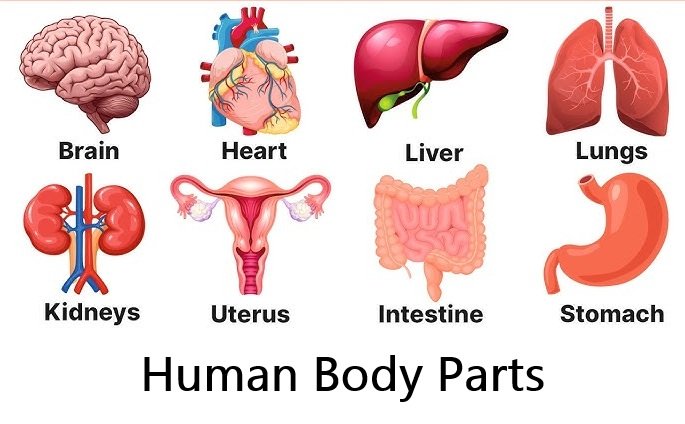
Learning the human body parts names in both English and Hindi is useful for language learners, students, medical professionals, parents teaching children, and anyone communicating about health or anatomy across languages. Hindi terms often appear in everyday conversation in India and among Hindi speakers worldwide, while English is standard in medical and educational contexts.
Human Body Parts
This article presents a comprehensive list of 78 common human body parts (external and internal), with accurate English and Hindi names. The list draws from standard anatomical and educational references commonly used in bilingual learning resources. Note that the human body has far more than 78 distinct structures when including microscopic, specialized, or minor features; this selection focuses on frequently referenced major parts.
Head and Face (सिर और चेहरा)
| No. | English | Hindi |
|---|---|---|
| 1 | Head | सिर (Sir) |
| 2 | Hair | बाल (Baal) |
| 3 | Forehead | माथा (Maatha) |
| 4 | Face | चेहरा (Chehra) |
| 5 | Eye / Eyes | आँख / आँखें (Aankh / Aankhen) |
| 6 | Eyebrow | भौंह / भौं (Bhaunh) |
| 7 | Eyelid | पलक (Palak) |
| 8 | Eyelashes | पलकें / बरौनी (Palken / Barouni) |
| 9 | Ear / Ears | कान (Kaan) |
| 10 | Nose | नाक (Naak) |
| 11 | Nostril | नथुना (Nathuna) |
| 12 | Cheek | गाल (Gaal) |
| 13 | Mouth | मुँह / मुख (Munh) |
| 14 | Lips | होंठ (Honth) |
| 15 | Tongue | जीभ (Jeebh) |
| 16 | Teeth / Tooth | दाँत / दांत (Daant) |
| 17 | Chin | ठोड़ी / ठुड्डी (Thodi / Thuddi) |
| 18 | Temple | कनपटी (Kanpati) |
| 19 | Jaw | जबड़ा (Jabda) |
| 20 | Skull | खोपड़ी / कपाल (Khopdi / Kapal) |
Neck, Torso, and Upper Body (गर्दन, धड़ और ऊपरी शरीर)
| No. | English | Hindi |
|---|---|---|
| 21 | Neck | गर्दन (Gardan) |
| 22 | Throat | गला (Gala) |
| 23 | Shoulder | कंधा (Kandha) |
| 24 | Chest | छाती (Chhati) |
| 25 | Breast | स्तन (Stan) |
| 26 | Back | पीठ (Peeth) |
| 27 | Spine / Backbone | रीढ़ / रीढ़ की हड्डी (Reedh) |
| 28 | Waist | कमर (Kamar) |
| 29 | Abdomen / Belly / Stomach (external) | पेट (Pet) |
| 30 | Navel | नाभि (Nabhi) |
| 31 | Hip | कूल्हा / नितंब (Koolha / Nitamb) |
| 32 | Collarbone | हंसली (Hansli) |
| 33 | Rib | पसली (Pasli) |
Arms and Hands (हाथ और बांह)
| No. | English | Hindi |
|---|---|---|
| 34 | Arm | बांह / भुजा (Baanh / Bhuja) |
| 35 | Elbow | कोहनी (Kohni) |
| 36 | Wrist | कलाई (Kalai) |
| 37 | Hand | हाथ (Haath) |
| 38 | Palm | हथेली (Hatheli) |
| 39 | Finger | उंगली / अंगुली (Ungli) |
| 40 | Thumb | अंगूठा (Angootha) |
| 41 | Nail | नाखून (Naakhoon) |
| 42 | Armpit | कांख / बगल (Kaankh / Bagal) |
| 43 | Fist | मुट्ठी (Mutthi) |
Legs and Feet (पैर और टांग)
| No. | English | Hindi |
|---|---|---|
| 44 | Leg | पैर / टांग (Pair / Taang) |
| 45 | Thigh | जाँघ (Jaangh) |
| 46 | Knee | घुटना (Ghutna) |
| 47 | Calf | पिंडली (Pindli) |
| 48 | Ankle | टखना (Takhna) |
| 49 | Foot | पाँव / पैर (Paanv / Pair) |
| 50 | Heel | एड़ी (Edi) |
| 51 | Sole | तलवा / पंजा (Talwa / Panja) |
| 52 | Toe | पैर की उंगली (Pair ki Ungli) |
Skin, Bones, Muscles, and Related Structures
| No. | English | Hindi |
|---|---|---|
| 53 | Skin | त्वचा / चमड़ी (Twacha / Chamdi) |
| 54 | Bone | हड्डी (Haddi) |
| 55 | Muscle | पेशी / मांसपेशी (Peshi / Maanspeshi) |
| 56 | Joint | जोड़ (Jod) |
| 57 | Blood | रक्त / खून (Rakt / Khoon) |
| 58 | Vein | नस / शिरा (Nas / Shira) |
| 59 | Artery | धमनी (Dhamni) |
| 60 | Nerve | तंत्रिका / नस (Tantrika / Nas) |
Internal Organs (आंतरिक अंग)
| No. | English | Hindi |
|---|---|---|
| 61 | Brain | मस्तिष्क / दिमाग (Mastishk / Dimaag) |
| 62 | Heart | हृदय / दिल (Hriday / Dil) |
| 63 | Lung | फेफड़ा (Phephda) |
| 64 | Liver | यकृत / जिगर (Yakrit / Jigar) |
| 65 | Kidney | गुर्दा / वृक्क (Gurda / Vrikka) |
| 66 | Stomach (internal) | आमाशय / पेट (Aamashay / Pet) |
| 67 | Intestine | आँत / आंत (Aant) |
| 68 | Gallbladder | पित्ताशय (Pittashay) |
| 69 | Bladder (Urinary) | मूत्राशय (Mutrashay) |
| 70 | Spleen | तिल्ली / प्लीहा (Tilli / Pleeha) |
| 71 | Pancreas | अग्न्याशय (Agnyashay) |
| 72 | Esophagus / Food Pipe | अन्ननली (Annanali) |
| 73 | Windpipe / Trachea | श्वासनली / गले की नली (Shwaasnali) |
| 74 | Larynx | स्वरयंत्र / कंठ (Swaryantra / Kanth) |
| 75 | Pharynx | ग्रसनी (Grasni) |
Additional Common Structures
| No. | English | Hindi |
|---|---|---|
| 76 | Beard | दाढ़ी (Daadhi) |
| 77 | Mustache / Moustache | मूंछ (Moonchh) |
| 78 | Gum | मसूड़ा (Masooda) |
Human body Internal Parts name
Human body External Parts name
Human Body Parts and Their Functions
The human body is made up of organs, tissues, bones, muscles, and systems that work together to keep us alive and healthy. Below is a comprehensive list of major body parts and their primary functions.
| Body Part / Organ | Main Function |
|---|---|
| Brain | Controls thoughts, memory, movement, emotions, and most body functions. |
| Eyes | Provide vision and help detect light, colors, shapes, and movement. |
| Ears | Responsible for hearing and helping maintain balance. |
| Nose | Detects smells and helps filter, warm, and humidify incoming air. |
| Mouth | Used for eating, chewing, speaking, and beginning digestion. |
| Tongue | Helps taste, move food, swallow, and produce speech. |
| Teeth | Cut, tear, and grind food. |
| Lips | Help with eating, speaking, facial expressions, and sensing temperature. |
| Skin | Protects the body and helps regulate temperature and sensation. |
| Hair | Provides protection and helps with temperature regulation. |
| Neck | Supports the head and contains important structures such as the throat and major blood vessels. |
| Shoulders | Connect the arms to the trunk and allow arm movement. |
| Arms | Help with lifting, carrying, reaching, and other movements. |
| Elbows | Allow the forearm to bend and rotate. |
| Hands | Used for grasping, touching, writing, and performing precise movements. |
| Fingers | Provide grip and enable fine motor skills. |
| Thumb | Helps with gripping and manipulating objects. |
| Chest | Protects the heart and lungs through the rib cage. |
| Back | Supports the body and protects the spinal cord. |
| Spinal Cord | Carries nerve signals between the brain and the rest of the body. |
| Abdomen | Contains and protects many digestive and other internal organs. |
| Heart | Pumps blood throughout the body. |
| Lungs | Take oxygen into the blood and remove carbon dioxide. |
| Trachea (Windpipe) | Carries air between the throat and lungs. |
| Esophagus | Moves swallowed food from the throat to the stomach. |
| Stomach | Mixes food with digestive juices and begins major protein digestion. |
| Small Intestine | Digests food and absorbs most nutrients. |
| Large Intestine | Absorbs water and forms feces. |
| Liver | Processes nutrients, produces bile, detoxifies substances, and performs many metabolic functions. |
| Gallbladder | Stores and releases bile to help digest fats. |
| Pancreas | Produces digestive enzymes and hormones such as insulin. |
| Spleen | Helps filter blood and supports the immune system. |
| Kidneys | Filter blood, remove wastes, produce urine, and help regulate fluids and electrolytes. |
| Ureters | Carry urine from the kidneys to the bladder. |
| Urinary Bladder | Stores urine before it leaves the body. |
| Urethra | Carries urine from the bladder outside the body. |
| Bones | Support the body, protect organs, and help with movement. |
| Skull | Protects the brain and forms the structure of the face. |
| Spine/Vertebral Column | Supports the body and protects the spinal cord. |
| Ribs | Protect the heart and lungs and assist breathing. |
| Pelvis | Supports the trunk and protects pelvic organs. |
| Muscles | Produce movement, maintain posture, and generate heat. |
| Joints | Connect bones and allow movement and flexibility. |
| Cartilage | Provides cushioning and support at joints and other body structures. |
| Ligaments | Connect bones to bones and stabilize joints. |
| Tendons | Connect muscles to bones and transmit force for movement. |
| Blood | Carries oxygen, nutrients, hormones, and waste products. |
| Blood Vessels | Transport blood throughout the body. |
| Arteries | Generally carry blood away from the heart. |
| Veins | Generally carry blood toward the heart. |
| Capillaries | Allow exchange of oxygen, nutrients, and wastes between blood and tissues. |
| Nerves | Carry electrical signals between the brain, spinal cord, and body. |
| Thyroid Gland | Produces hormones that regulate metabolism and energy use. |
| Pituitary Gland | Produces hormones that regulate growth and several other endocrine functions. |
| Adrenal Glands | Produce hormones involved in stress response, metabolism, and blood pressure regulation. |
| Thymus | Helps develop certain immune cells, especially during childhood. |
| Ovaries | Produce eggs and hormones such as estrogen and progesterone. |
| Uterus | Supports development of a pregnancy. |
| Testes | Produce sperm and testosterone. |
| Prostate | Produces fluid that contributes to semen. |
| Penis | Functions in urination and reproduction. |
| Vagina | Functions as part of the reproductive tract and birth canal. |
| Anus | Controls the elimination of feces. |
| Rectum | Stores feces before bowel movement. |
Major Human Body Systems
| Body System | Main Function |
|---|---|
| Nervous System | Controls and coordinates body activities and responses. |
| Circulatory System | Transports blood, oxygen, nutrients, hormones, and wastes. |
| Respiratory System | Enables breathing and exchange of oxygen and carbon dioxide. |
| Digestive System | Breaks down food and absorbs nutrients. |
| Skeletal System | Provides support, protection, and a framework for movement. |
| Muscular System | Enables movement, posture, and heat production. |
| Endocrine System | Produces hormones that regulate body processes. |
| Urinary System | Removes wastes and regulates water and electrolyte balance. |
| Immune/Lymphatic System | Defends the body against infections and helps maintain fluid balance. |
| Reproductive System | Enables reproduction and produces reproductive hormones. |
| Integumentary System | Includes skin, hair, nails, and glands; protects the body and helps regulate temperature. |
(Girl) Female Body Parts Names
Head and Face:
- Hair
- Eyes
- Forehead
- Eyelashes
- Eyebrows
- Nose
- Cheeks
- Ears
- Lips
- Teeth
- Tongue
- Neck
- Chin
Upper Body:
- Shoulders
- Arms
- Wrists
- Elbows
- Hands
- Fingers
- Nails
- Chest
- Breasts
Lower Body:
- Waist
- Hips
- Thighs
- Knees
- Calves
- Ankles
- Feet
- Toes
Male Body Parts Name
Head and Face:
- Hair
- Forehead
- Eyes
- Eyebrows
- Eyelashes
- Nose
- Ears
- Cheeks
- Lips
- Teeth
- Tongue
- Chin
- Neck
- Beard
Upper Body:
- Shoulders
- Arms
- Elbows
- Wrists
- Hands
- Fingers
- Nails
- Chest
Lower Body :
- Waist
- Hips
- Thighs
- Knees
- Calves
- Ankles
- Feet
- Toes
Tips for Learning and Using These Human Body Parts Names
- Practice in categories (head, limbs, organs) for easier memorization.
- Use everyday sentences: “मेरे सिर में दर्द है” (Mere sir mein dard hai – I have a headache) or “My knee hurts.”
- Hindi has regional variations in pronunciation and some alternative terms (e.g., दिल vs हृदय for heart). Formal or medical contexts often prefer more precise Sanskrit-derived words.
- For medical or educational accuracy, consult standard anatomy resources, as some terms (especially internal organs) have precise scientific names beyond common usage.
Knowing these 78 body parts in both languages builds vocabulary, supports better communication in bilingual settings, and provides a foundation for further study of human anatomy. Regular practice with flashcards, labeled diagrams, or conversation will help the terms stick.
About The Author
