
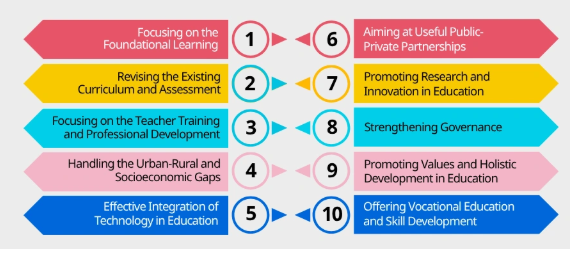
Government basic schools (primarily primary and elementary levels) educate the majority of India’s children, especially from rural and economically weaker sections. While access has expanded significantly under schemes like Sarva Shiksha Abhiyan and the Right to Education Act, learning outcomes remain low. ASER 2024 data shows recovery from pandemic losses, with about 23.4% of Class 3 children in government schools able to read a Class 2-level text (up from 16.3% in 2022), yet the absolute levels indicate that most children still lack foundational literacy and numeracy.
Improving quality requires addressing systemic issues rather than isolated interventions. Evidence-based approaches focusing on learning outcomes, teacher effectiveness, accountability, and community involvement offer the most promising path forward.
Current Status of Learning Outcomes in Government Schools
Foundational skills form the base of all future learning. Recent surveys reveal that while enrolment is high, a large proportion of children in government schools cannot perform grade-level tasks in reading and arithmetic even after several years of schooling.
ASER 2024 indicates modest post-COVID recovery, with government schools showing stronger gains than private ones in some metrics. However, nearly three-fourths of Class 3 students in rural government schools still struggle with basic reading, and similar gaps persist in arithmetic. These deficits compound over time, leading to higher dropout rates and limited skill development by secondary stages. Regional variations are stark, with some states showing faster improvement while others lag significantly.
Why the Government Has Struggled to Improve These Schools
Multiple structural and political factors limit the effectiveness of reforms. First, education is a concurrent subject, creating coordination challenges between Centre and states; ambitious national policies often face uneven implementation due to varying state capacity and priorities. Funding, though increased, remains below the recommended 6% of GDP, and resources are frequently absorbed by salaries and infrastructure rather than learning-focused interventions.
Accountability mechanisms are weak. Teacher absenteeism, multi-grade teaching without adequate support, and limited consequences for poor performance persist in many areas. Political incentives favour visible inputs (buildings, enrolment drives) over less visible outcomes like learning levels, which are harder for voters to monitor. Bureaucratic inertia, delayed fund flows, and resistance to performance-based evaluation further slow progress. Additionally, the exit of middle-class families to private schools reduces pressure for systemic improvement, as the most vocal stakeholders no longer depend on government schools.
Best Ways to Improve Quality of Basic School Education in India
Prioritise Foundational Literacy and Numeracy (FLN)
Focus intensively on ensuring every child achieves basic reading and arithmetic skills by Class 3, as mandated by NEP 2020 and NIPUN Bharat. This requires age-appropriate, activity-based teaching rather than rigid textbook completion. Regular diagnostic assessments should identify learning gaps early, followed by targeted remedial programmes. States that invested in FLN materials, teacher training, and school readiness modules have shown measurable gains. Sustained emphasis here yields the highest long-term returns on educational investment.
Strengthen Teacher Quality, Training, and Accountability
Teachers are the most critical factor in classroom learning. Continuous professional development through programmes like NISHTHA should move beyond one-time workshops to ongoing mentoring and peer learning. Recruitment must prioritise subject knowledge and pedagogical skills, while deployment should address single-teacher schools and high pupil-teacher ratios. Transparent performance monitoring linked to student learning outcomes, combined with incentives for improvement and clear consequences for chronic absenteeism, can raise standards. Empowering head teachers with greater administrative autonomy also improves school-level management.
Improve Infrastructure and Basic Amenities
Functional toilets (especially for girls), electricity, drinking water, libraries, and safe classrooms remain incomplete in thousands of schools. Digital infrastructure and teaching-learning materials should be prioritised where they demonstrably support learning rather than as standalone prestige projects. School consolidation must be carefully managed to avoid increasing travel distances that discourage attendance, particularly for girls. Community monitoring of infrastructure utilisation can reduce misuse of funds and ensure facilities remain functional.
Enhance Accountability and Decentralised Governance
Shift from input-based monitoring (enrolment, infrastructure checklists) to outcome-based systems focused on learning levels. Strengthen School Management Committees with real decision-making powers over local resources and teacher attendance. Publish school-level learning data publicly to create pressure for improvement. District and block-level officers should be evaluated on measurable learning gains rather than only administrative compliance. Independent third-party assessments, similar to ASER, help maintain transparency.
Implement Effective Pedagogy and Curriculum Reforms
Move away from rote memorisation toward competency-based, experiential learning as envisioned in NEP 2020. Multi-grade and multi-level teaching strategies are essential given classroom realities. Mother-tongue based instruction in early grades improves comprehension. Continuous comprehensive evaluation should genuinely track progress instead of becoming another bureaucratic exercise. Integration of vocational exposure and life skills at the elementary level can increase relevance and student engagement.
Increase Community and Parental Engagement
Parents and local communities are powerful allies when informed and involved. Regular parent-teacher meetings focused on individual child progress, rather than formalities, build ownership. Community libraries, volunteer reading programmes, and local monitoring of school functioning have shown success in several states. Transparent communication of learning outcomes helps families demand better performance and reduces the perception that government schools are a last resort.
Optimise Resource Allocation and Funding
Public expenditure on education needs better targeting. Resources should prioritise early grades, teacher capacity, and learning materials over higher-level expansion when foundational gaps remain large. Performance-linked grants to states and schools can incentivise results. Technology should be used judiciously for teacher support, assessment, and monitoring rather than as a substitute for quality teaching. Public-private partnerships for specific interventions (teacher training, content development) can bring innovation without diluting public responsibility.
Role of Technology and Data-Driven Approaches
Technology can support but not replace good teaching. Platforms like DIKSHA provide resources, while tools for real-time attendance and assessment improve monitoring. Data systems such as UDISE+ and state-level dashboards should be used for decision-making rather than mere reporting. Artificial intelligence-assisted adaptive learning holds promise for personalised remediation, but only where teachers are trained to integrate it effectively. Over-reliance on hardware without pedagogical readiness has limited impact.
Measuring Success and Sustaining Reforms
Success should be measured primarily by improvements in foundational learning levels, reduced learning gaps between socio-economic groups, and higher retention into secondary education. Independent assessments conducted regularly help track genuine progress. Reforms must be sustained across political cycles; short-term campaigns rarely produce lasting change. Building state capacity for implementation, rather than repeatedly launching new schemes, remains essential.
Abhijeet Dipke Village Schools Campaign
Abhijeet Dipke Village Schools Campaign: A Grassroots Push for Rural Education Infrastructure
On the eve of India’s 80th Independence Day in 2026, Abhijeet Dipke, founder of the Cockroach Janta Party (CJP), announced a nationwide campaign focused on improving government schools in villages. The initiative highlights the persistent neglect of basic facilities in rural educational institutions that serve primarily the children of farmers and labourers. Dipke plans to launch the effort from his native village in Hingoli district, Maharashtra, by approaching the local sarpanch.
The campaign calls for community-led action rather than relying solely on higher-level government intervention. It urges parents to conduct social audits of school facilities and encourages village heads (sarpanches) to take direct responsibility for improvements. By tying the launch to Independence Day, the organisers aim to frame better rural schools as a national priority and a practical expression of citizenship.
Background of Abhijeet Dipke and the Cockroach Janta Party
Abhijeet Dipke, born in 1995 in Aurangabad (now Chhatrapati Sambhajinagar), Maharashtra, rose to national attention in 2026 as the face of a youth-led protest movement. He earlier worked with the Aam Aadmi Party’s digital team and later studied public relations at Boston University. The Cockroach Janta Party began as a satirical response to a judicial remark comparing unemployed youth to cockroaches and evolved into a platform addressing youth concerns, including education and employment.
Dipke has spoken about his personal connection to village schooling. He has described spending summers in his village and observing the contrast between the education he received and the conditions faced by many local children. This background informs the campaign’s emphasis on basic dignity and opportunity for rural students. The CJP positions the school initiative as a constructive, grassroots follow-up to its earlier activism.
Objectives of the Village Schools Campaign
The primary goal is to ensure that government schools in villages provide essential infrastructure so that children can study in a safe and functional environment. Dipke has questioned the national priorities that enable major construction projects while many rural schools still lack reliable electricity, clean drinking water, and usable toilets. The campaign seeks to make these basic amenities non-negotiable.
A secondary objective is to foster local accountability. By involving parents and sarpanches, the initiative aims to create visible pressure and recognition for improvements at the village level. It also seeks to document the current state of facilities through citizen audits, generating public data that can be shared widely. The organisers hope successful examples will inspire replication across other villages.
Key Components of the Campaign
Social Audit by Parents
Parents of children studying in government schools are asked to visit the institutions and systematically check for basic facilities. The focus areas include availability of electricity, clean drinking water, functional toilets (especially separate facilities for girls), and the regularity and quality of mid-day meals. A printable audit form is to be made available so that findings can be recorded in a structured manner.
This citizen-led documentation is intended to create a bottom-up assessment that complements official data. The organisers plan to collect and publicise the results to highlight gaps and successful cases. By placing the responsibility of verification with parents, the campaign tries to convert passive concern into active monitoring.
The Sarpanch Challenge
Village heads are challenged to take ownership of improving the government schools under their jurisdiction. Dipke has stated that he will personally approach the sarpanch of his village in Hingoli to begin the process. The CJP intends to share before-and-after photographs of upgraded schools on social media and publicly credit the sarpanches responsible.
Public recognition is designed to create positive incentives and peer pressure among elected village leaders. The organisers believe that visible success in one village can motivate neighbouring communities. This approach attempts to leverage local political leadership rather than waiting solely for district or state-level action.
Focus on Specific Infrastructure Gaps
The campaign repeatedly highlights four core deficiencies: absence or unreliability of electricity, lack of safe drinking water, non-functional or missing toilets (particularly affecting girls), and problems with mid-day meal provision. Long distances that children, especially girls, must travel to reach school are also noted as a barrier.
These priorities reflect well-documented challenges in many rural government schools. Addressing them is presented as a minimum standard of dignity rather than an ambitious upgrade. The campaign argues that without these basics, discussions of learning outcomes or digital education remain secondary.
Realistic Solutions to Improve Outcomes
While the campaign usefully draws attention to infrastructure deficits, lasting improvement requires complementary measures beyond audits and local appeals. Strengthening the capacity and accountability of School Management Committees can institutionalise parent involvement so that monitoring continues after the initial publicity fades. Linking a portion of local development funds or panchayat incentives to verified school improvements can create stronger financial motivation for sarpanches.
Teacher attendance and teaching quality remain equally critical. Infrastructure upgrades yield limited results if classrooms lack regular, effective instruction. Combining facility improvements with transparent teacher monitoring and community feedback mechanisms would address both input and process failures. Independent verification of audit findings, perhaps through partnerships with civil society organisations or local colleges, can enhance credibility and reduce the risk of incomplete or biased reporting.
At the systemic level, better utilisation of existing schemes under Samagra Shiksha and clearer timelines for resolving documented deficiencies are necessary. Public dashboards showing school-level facility status, updated regularly, would sustain pressure. Finally, any campaign focused on rural schools should eventually expand from infrastructure to measurable learning outcomes, ensuring that better buildings translate into better education for children.
Potential Impact and Challenges
If widely adopted, the campaign could generate valuable ground-level data and create local ownership of school improvement. Public recognition of proactive sarpanches may encourage healthy competition among villages. Linking the effort to Independence Day symbolism can broaden emotional appeal and media attention.
Challenges include the risk that initial enthusiasm may not convert into sustained maintenance of facilities. Some sarpanches may lack resources or face administrative hurdles in accessing funds. Without follow-up mechanisms, audits could remain one-time exercises. Political polarisation around the CJP’s earlier activities may also affect the campaign’s reception in certain regions. Success will depend on whether the initiative remains focused on practical school improvements rather than broader political messaging.
Abhijeet Dipke’s Village Schools Campaign represents a citizen-driven attempt to address long-standing deficiencies in rural government education infrastructure. By combining parent social audits with a public challenge to sarpanches and launching on Independence Day, it seeks to turn awareness into local action. The emphasis on basic facilities such as electricity, water, toilets, and mid-day meals targets foundational problems that affect attendance, dignity, and learning readiness.
Realistic progress will require moving beyond documentation and recognition toward institutional accountability, resource linkages, and eventual focus on teaching quality and learning outcomes. When communities, local leaders, and existing government systems align around measurable improvements, rural government schools can better serve the children who depend on them most. The campaign’s ultimate value will be judged by the number of schools that see lasting, verifiable change rather than by the volume of initial publicity.
Conclusion
Improving government basic schools is both urgent and achievable. Recent modest gains in learning recovery demonstrate that focused efforts on foundational skills, teacher support, and accountability can produce results. The core challenge is not the absence of policies—NEP 2020 provides a sound framework—but consistent, high-quality implementation that prioritises outcomes over inputs. Addressing weak accountability, political incentives favouring visibility over learning, and capacity constraints at the state and local levels is necessary for meaningful change. When government schools deliver strong foundational education, they expand opportunity for the largest section of India’s children and strengthen the foundation of national development.
About The Author
