
The Delhi Subordinate Services Selection Board (DSSSB) conducts recruitment for various technical and non-technical posts, including Junior Scientific Assistant (JSA) in departments like forensic labs, environmental science, and technical units.
The DSSSB Junior Scientific Assistant Syllabus 2026 is structured to assess candidates on general aptitude as well as domain-specific knowledge relevant to the post. Understanding the syllabus and exam pattern is essential for effective preparation and scoring high marks.
DSSSB Junior Scientific Assistant Syllabus 2026
The DSSSB Junior Scientific Assistant (JSA) Syllabus 2026 generally follows the standard DSSSB pattern with Section A (General Subjects) + Section B (Subject-specific/discipline-related topics).
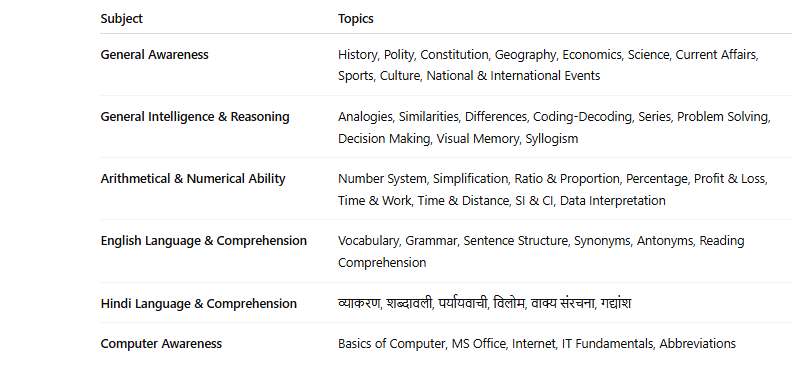
Below is a clear tabular syllabus for easy understanding:
Section A: General Subjects (Common for all posts)
| Subject | Topics |
|---|---|
| General Awareness | History, Polity, Constitution, Geography, Economics, Science, Current Affairs, Sports, Culture, National & International Events |
| General Intelligence & Reasoning | Analogies, Similarities, Differences, Coding-Decoding, Series, Problem Solving, Decision Making, Visual Memory, Syllogism |
| Arithmetical & Numerical Ability | Number System, Simplification, Ratio & Proportion, Percentage, Profit & Loss, Time & Work, Time & Distance, SI & CI, Data Interpretation |
| English Language & Comprehension | Vocabulary, Grammar, Sentence Structure, Synonyms, Antonyms, Reading Comprehension |
| Hindi Language & Comprehension | व्याकरण, शब्दावली, पर्यायवाची, विलोम, वाक्य संरचना, गद्यांश |
| Computer Awareness | Basics of Computer, MS Office, Internet, IT Fundamentals, Abbreviations |
These subjects are common across DSSSB exams and test general aptitude.
Section B: Subject-Specific (Junior Scientific Assistant)
This section depends on the discipline (Biology, Chemistry, Physics, Cyber Forensic, Ballistics, etc.).
| Discipline | Important Topics |
|---|---|
| Biology | Cell Biology, Genetics, Microbiology, Biotechnology, Human Physiology, Ecology |
| Chemistry | Organic, Inorganic & Physical Chemistry, Analytical Techniques, Forensic Chemistry |
| Physics | Mechanics, Optics, Thermodynamics, Electronics, Modern Physics |
| Cyber Forensic | Computer Networks, Cyber Security, Digital Forensics, Data Recovery, IT Laws |
| Ballistics/Forensic Science | Crime Scene Investigation, Ballistics, Fingerprints, Forensic Techniques |
Section B focuses on the core subject based on qualification.
DSSSB Junior Scientific Assistant Exam Pattern 2026
The exam pattern for Junior Scientific Assistant follows the standard DSSSB technical post structure, consisting of two sections (A & B):
Exam Pattern Overview
| Section | Subject | Questions | Marks |
|---|---|---|---|
| Section A | General Awareness | 20 | 20 |
| Reasoning Ability | 20 | 20 | |
| Numerical Ability | 20 | 20 | |
| Hindi Language | 20 | 20 | |
| English Language | 20 | 20 | |
| Section B | Subject/Technical (Concerned Discipline) | 100 | 100 |
| Total | 200 | 200 |
Key Highlights
- Mode of Exam: Online (Computer-Based Test)
- Type: Objective (MCQs)
- Duration: 2 Hours
- Negative Marking: 0.25 marks deducted per wrong answer
- Merit is based on the combined marks of Section A + Section B
Note: For technical posts like JSA, Section B (subject-specific) plays a crucial role in final selection.
DSSSB Junior Scientific Assistant Syllabus 2026
The syllabus is divided into two major parts:
Section A: General Subjects
This section is common across most DSSSB exams and tests basic aptitude.
1. General Awareness
- Indian History, Polity, Geography
- Economy & Constitution
- Science & Technology
- Current Affairs (National & International)
- Important Days, Books & Authors
- Environmental Issues
Covers static + current GK topics similar to other DSSSB exams
2. General Intelligence & Reasoning
- Analogies & Similarities
- Coding-Decoding
- Series (Number & Alphabet)
- Blood Relations
- Direction Test
- Logical Reasoning
- Data Sufficiency
- Non-verbal reasoning
3. Numerical Ability
- Number System
- Simplification
- Ratio & Proportion
- Percentage
- Profit & Loss
- Time & Work
- Speed, Time & Distance
- Data Interpretation
4. English Language & Comprehension
- Vocabulary
- Grammar (Error Detection, Fill in the Blanks)
- Synonyms & Antonyms
- Reading Comprehension
- Sentence Improvement
5. Hindi Language & Comprehension
- व्याकरण (Grammar)
- वाक्य शुद्धि
- पर्यायवाची / विलोम शब्द
- मुहावरे एवं लोकोक्तियाँ
- अपठित गद्यांश
Section B: Subject-Specific Syllabus
This is the most important section for a Junior Scientific Assistant.
The syllabus varies depending on the discipline, such as:
Common Disciplines in JSA
- Biology / Microbiology
- Chemistry
- Physics
- Environmental Science
- Cyber Forensics
- Ballistics / Forensic Science
General Topics (Indicative)
- Core concepts of a graduation-level subject
- Laboratory techniques & instruments
- Scientific principles and applications
- Research methodology
- Data analysis & interpretation
- Field-specific case studies (especially forensic posts)
DSSSB clearly mentions that Section B is based on qualification and specialization
DSSSB Junior Scientific Assistant Biology Syllabus
The DSSSB Junior Scientific Assistant (Biology) Syllabus 2026 is in a clear, exam-oriented format based on the latest recruitment pattern (Advt. 03/2026).
- Mode: Online (CBT)
- Type: Objective (MCQs)
- Total Questions: 200
- Total Marks: 200
- Duration: 2 Hours
- Negative Marking: Yes (0.25 mark)
- Sections:
- Section A – General Subjects
- Section B – Biology (Post-specific)
DSSSB exams generally include GA, reasoning, language, and subject-specific questions for technical posts
Section A: General Subjects (Common for all posts)
1. General Awareness
- Current Affairs (National & International)
- Indian History, Polity & Constitution
- Geography & Economy
- Science & Technology
- Important Schemes & Organizations
2. General Intelligence & Reasoning
- Analogies, Coding-Decoding
- Series, Classification
- Blood Relations
- Direction Sense
- Logical Reasoning & Puzzles
3. Arithmetical & Numerical Ability
- Number System
- Percentage, Profit & Loss
- Ratio & Proportion
- Time & Work, Time & Distance
- Simple & Compound Interest
4. Hindi & English Language
- Grammar (Tenses, Articles, Prepositions)
- Vocabulary (Synonyms/Antonyms)
- Comprehension
- Sentence Correction
Section B: Biology (Core Subject Syllabus)
This is the most important section for selection.
1. Cell Biology
- Cell structure & function
- Cell cycle, mitosis & meiosis
- Biomolecules (proteins, lipids, carbohydrates)
2. Genetics & Molecular Biology
- Mendelian genetics
- DNA replication, transcription, translation
- Gene expression & regulation
- Mutation & genetic disorders
3. Biochemistry
- Enzymes & metabolism
- Carbohydrate, lipid & protein metabolism
- Vitamins & hormones
4. Microbiology
- Bacteria, viruses, fungi
- Growth & reproduction
- Sterilization & culture techniques
5. Human Physiology
- Digestive, respiratory, circulatory systems
- Nervous & endocrine systems
- Excretory system
6. Botany & Zoology Basics
- Plant physiology
- Animal classification
- Ecology & environment
7. Biotechnology
- Recombinant DNA technology
- PCR, cloning
- Genetic engineering
8. Forensic Biology (VERY IMPORTANT)
- Biological evidence (blood, semen, hair, DNA)
- DNA fingerprinting
- Serology
- Crime scene investigation basics
Since this post is in Forensic Science Laboratory, forensic biology topics are highly important.
Qualification Insight (Helps in Syllabus Focus)
Candidates typically have a Master’s degree in subjects like:
- Zoology, Botany, Microbiology
- Biochemistry, Genetics, Biotechnology
- Forensic Science
So the syllabus is MSc-level + applied forensic biology
DSSSB Junior Scientific Assistant Chemistry Syllabus 2026
The complete DSSSB Junior Scientific Assistant (Chemistry) Syllabus 2026 is based on the latest notification pattern (Advt. 03/2026) and official indicative syllabus.
Exam Pattern (One-Tier Technical Exam)
| Section | Subjects | Questions | Marks |
|---|---|---|---|
| Section A | General Awareness, Reasoning, Numerical Ability, Hindi, English | 100 | 100 |
| Section B | Chemistry (Subject-specific) | 100 | 100 |
| Total | — | 200 | 200 |
- Each question = 1 mark
- Negative marking: 0.25 marks
- Section B (Chemistry) is most important for selection
Section A Syllabus (Common for All)
1. General Awareness
- History, Polity, Constitution
- Geography, Economy
- Science & Technology
- Current Affairs (National & International)
2. Reasoning Ability
- Analogies, Series, Coding-Decoding
- Blood Relations, Direction Sense
- Venn Diagrams, Puzzles
3. Numerical Ability
- Number System
- Percentage, Profit & Loss
- Ratio & Proportion
- Time & Work, Time & Distance
4. English Language
- Grammar (Tense, Articles, Prepositions)
- Vocabulary, Synonyms/Antonyms
- Comprehension
5. Hindi Language
- व्याकरण
- पर्यायवाची, विलोम
- गद्यांश
Section B: Chemistry Syllabus (Core Part)
Questions are based on Master’s level Chemistry / related subjects (as per eligibility)
1. Physical Chemistry
- Atomic Structure & Quantum Mechanics
- Chemical Bonding
- Thermodynamics & Thermochemistry
- Chemical Kinetics
- Electrochemistry
- Surface Chemistry & Colloids
2. Organic Chemistry
- Basic Concepts & Reaction Mechanism
- Hydrocarbons
- Alcohols, Phenols, Ethers
- Aldehydes, Ketones, Carboxylic Acids
- Amines
- Polymers & Biomolecules
3. Inorganic Chemistry
- Periodic Table & Periodicity
- Coordination Compounds
- Transition Elements
- Chemical Bonding
- p-block, d-block elements
4. Analytical Chemistry
- Volumetric Analysis
- Gravimetric Analysis
- Chromatography (TLC, GC, HPLC)
- Spectroscopy (UV, IR, NMR, Mass)
- Error Analysis & Instrumentation
5. Forensic & Applied Chemistry
- Forensic Toxicology
- Drug Analysis
- Explosives & Narcotics
- Chemical Examination of Evidence
- Environmental Chemistry
Chemistry + Toxicology + Biochemistry + Forensic Science topics are commonly included
Selection Process
The selection process for DSSSB Junior Scientific Assistant generally includes:
- Written Examination (Tier-I / Single Tier)
- Document Verification
Final merit is prepared based on written exam performance only.
Preparation Strategy
To crack DSSSB JSA 2026, follow this structured approach:
Focus on Section B
- 50% weightage comes from subject knowledge
- Revise graduation-level concepts thoroughly
Practice MCQs Daily
- Solve previous year papers
- Attempt mock tests regularly
Strengthen Basics
- Improve speed in reasoning & maths
- Work on grammar and comprehension
Stay Updated
- Read newspapers for current affairs
- Focus on science-related news
Important Tips for Success
- Prioritize accuracy over attempts due to negative marking
- Make short notes for revision
- Focus more on high-weightage topics
- Practice time management (200 questions in 2 hours)
Conclusion
The DSSSB Junior Scientific Assistant Syllabus 2026 is a balanced mix of general aptitude and technical knowledge. While Section A helps in scoring easy marks, Section B is the game-changer for final selection.
About The Author
