The SCTEVT Syllabus 2026 is an important resource for students pursuing Diploma/Polytechnic courses under the State Council for Technical Education & Vocational Training (SCTEVT), Odisha. The syllabus helps students understand what they will study in each semester, which subjects carry practical components, and how their preparation should progress from the first year to the final semester.
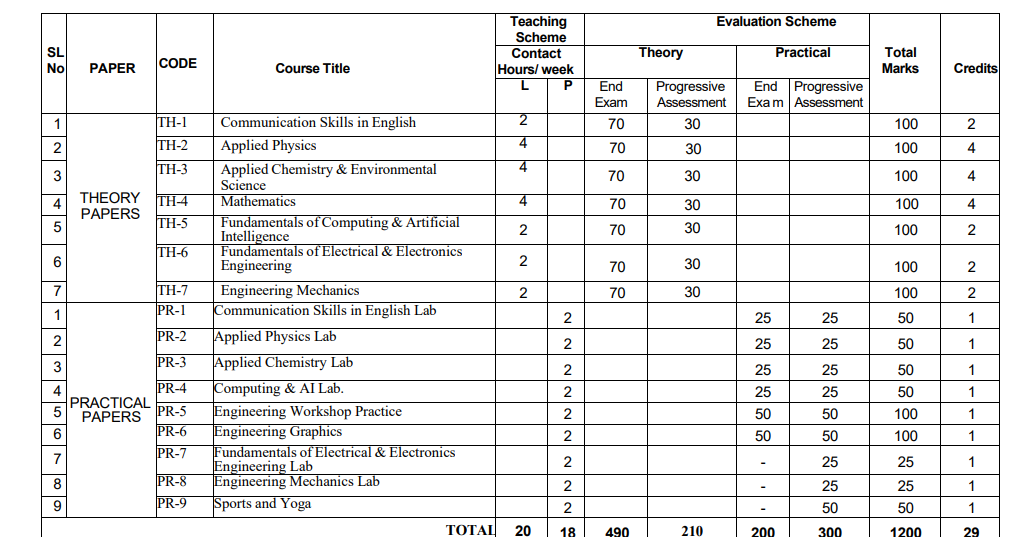
For the 2026-27 academic session, SCTEVT has introduced a new first-year Diploma syllabus for all engineering branches. The official SCTEVT syllabus portal provides branch-wise and semester-wise syllabus information, including courses from the 3rd to 6th semesters.
Students should remember that the exact subjects in the 3rd, 4th, 5th and 6th semesters vary according to the branch. For example, Civil Engineering students study subjects related to construction and surveying, while CSE students move towards programming, databases, and computer networks. The official portal separately lists these branch-wise syllabi.
SCTEVT Diploma Syllabus 2026: Overview
| Particular | Details |
|---|---|
| Board | State Council for Technical Education & Vocational Training, Odisha |
| Course | Diploma/Polytechnic |
| Academic Session | 2026-27 |
| Duration | Generally 3 years |
| Semesters | 1st to 6th |
| 1st & 2nd Semester | Common/first-year foundation syllabus for engineering branches |
| 3rd to 6th Semester | Branch-specific syllabus |
| Syllabus Mode | Online |
| Official Website | SCTEVT Odisha |
| Main Purpose | Theory, practical and industry-oriented technical education |
The SCTEVT portal currently shows a new First Year Diploma Syllabus for all Engineering Branches from Academic Year 2026-27 onwards. It also retains earlier revised/common syllabus versions, so students should select the syllabus applicable to their admission year rather than downloading an older version by mistake.
SCTEVT Diploma Syllabus 2026 for 1st and 2nd Semester
The first year is designed to build the basic academic and technical foundation required for diploma-level engineering education. Students from different engineering branches generally study a common or substantially common foundation during the initial stage.
The 2026-27 first-year syllabus is specifically listed by SCTEVT as a new syllabus for all engineering branches.
Major areas covered in the first year
| Subject/Area | Important Topics |
|---|---|
| Mathematics | Algebra, trigonometry, calculus, coordinate geometry and related mathematical concepts |
| Physics | Mechanics, properties of matter, heat, waves, electricity and basic modern physics |
| Chemistry | Atomic structure, chemical bonding, materials, solutions and basic industrial chemistry |
| Engineering Drawing | Geometrical construction, projections, sections, dimensioning and engineering drawings |
| Communication/English | Grammar, vocabulary, communication skills, comprehension and technical communication |
| Workshop Practice | Basic workshop tools, fitting, manufacturing processes and safety |
| Computer Fundamentals | Computer basics, operating systems, applications and digital concepts |
| Engineering/Technical Fundamentals | Basic concepts needed for the student’s chosen engineering discipline |
| Practical Work | Laboratory, workshop and skill-based exercises |
Note: The exact paper titles, codes, credits and unit-wise topics should be checked against the applicable official 2026-27 syllabus PDF because SCTEVT has changed the first-year syllabus for the new academic session.
SCTEVT 3rd Semester Syllabus 2026
The 3rd semester is where the syllabus becomes more specialised. Students move away from primarily common subjects and start studying the core subjects of their respective branches.
For instance, the SCTEVT portal separately lists 3rd-semester syllabi for Civil Engineering, Computer Science & Engineering, Electrical Engineering, Mechanical Engineering, Chemical Engineering, Automobile Engineering, AI & Machine Learning and several other disciplines.
Civil Engineering – 3rd Semester
Students can expect topics broadly related to:
- Building materials
- Construction technology
- Surveying
- Strength of materials
- Engineering mechanics
- Concrete and construction practices
- Civil engineering drawing
- Surveying practical
- Material testing
The 3rd semester marks the beginning of more practical exposure to construction, measurement and structural concepts.
Computer Science & Engineering – 3rd Semester
Important areas generally include:
- Data structures
- Programming
- Object-oriented programming concepts
- Digital electronics/computer organisation
- Database fundamentals
- Computer laboratory work
- Algorithms and problem-solving
The focus gradually shifts towards writing programs and understanding how computer systems process and store information.
Electrical Engineering – 3rd Semester
The major areas include subjects such as:
- Electrical circuits
- Electrical machines
- Electrical measurements
- Electronics fundamentals
- Network theory
- Electrical engineering practicals
- Basic power-system concepts
The syllabus combines mathematical understanding with laboratory-based electrical measurements and equipment handling.
Mechanical Engineering – 3rd Semester
Students generally move into subjects such as:
- Engineering mechanics
- Strength of materials
- Manufacturing processes
- Thermodynamics
- Machine-related fundamentals
- Engineering drawing
- Workshop/practical training
The practical component becomes particularly important because mechanical engineering requires familiarity with tools, machines and manufacturing processes.
SCTEVT 4th Semester Syllabus 2026
The 4th semester continues the core technical subjects and usually introduces more advanced concepts.
Civil Engineering
Major areas can include:
- Structural analysis
- Concrete technology
- Surveying
- Fluid mechanics
- Transportation engineering
- Construction management
- Civil engineering laboratory work
Computer Science & Engineering
Important areas include:
- Database management systems
- Computer networks
- Operating systems
- Advanced programming
- Software development concepts
- Web/computer applications
- Programming laboratory
Electrical Engineering
The syllabus generally progresses towards:
- Electrical machines
- Power systems
- Control systems
- Electrical measurements
- Power electronics
- Electrical laboratory work
Mechanical Engineering
Students generally encounter:
- Thermodynamics
- Fluid mechanics
- Manufacturing technology
- Machine design fundamentals
- Heat-transfer concepts
- Mechanical laboratory work
SCTEVT’s official database lists 4th-semester syllabi separately for branches such as Civil, CSE, Electrical, Mechanical, Chemical, Automobile and Electronics-related programmes.
SCTEVT 5th Semester Syllabus 2026
The 5th semester is particularly important because students have already developed the basic knowledge required for their discipline. At this stage, the syllabus becomes more application-oriented.
Civil Engineering
The syllabus can include areas such as:
- Structural design
- RCC design
- Geotechnical engineering
- Transportation engineering
- Environmental engineering
- Estimation and costing
- Construction management
Computer Science & Engineering
Students generally study advanced areas such as:
- Advanced database concepts
- Computer networks
- Software engineering
- Web technologies
- Operating systems
- Data communication
- Application development
- Project-oriented practical work
Electrical Engineering
The major focus areas include:
- Power systems
- Electrical protection
- Electrical drives
- Control systems
- Power electronics
- Utilisation of electrical energy
- Industrial electrical applications
Mechanical Engineering
Important areas may include:
- Machine design
- Production technology
- Heat transfer
- Refrigeration and air conditioning
- Industrial engineering
- Metrology
- Advanced manufacturing
SCTEVT’s syllabus listing confirms dedicated 5th-semester syllabi for multiple branches, including CSE, Civil, Electrical, Mechanical, Chemical, Automobile and Biotechnology.
SCTEVT 6th Semester Syllabus 2026
The 6th semester is the final academic stage of the regular three-year Diploma programme. Therefore, the emphasis is generally on advanced technical subjects, practical application, industry exposure and project work.
Civil Engineering – 6th Semester
Students generally study advanced areas such as:
- Structural design
- Environmental engineering
- Transportation
- Estimation and costing
- Construction management
- Project work
- Practical training
SCTEVT’s official listing includes a separate 6th-semester Civil Engineering syllabus.
Computer Science & Engineering – 6th Semester
Major areas may include:
- Advanced computer applications
- Software/project development
- Network administration
- Emerging computing technologies
- Information security concepts
- Project work
- Practical/laboratory work
The official SCTEVT database specifically lists the CSE syllabus for the 3rd, 4th, 5th and 6th semesters.
Electrical Engineering – 6th Semester
The final semester generally focuses on:
- Advanced power systems
- Industrial electrical applications
- Electrical protection
- Drives and control
- Renewable/modern electrical technologies
- Project work
- Practical training
SCTEVT lists a dedicated 6th-semester Electrical Engineering syllabus.
Mechanical Engineering – 6th Semester
Students generally deal with:
- Advanced manufacturing
- Machine design
- Industrial engineering
- Production management
- Automobile/thermal applications depending on specialisation
- Project work
- Practical training
The SCTEVT syllabus database includes separate 6th-semester syllabi for Mechanical Engineering and its specialised variants.
Branch-Wise SCTEVT Diploma Syllabus 2026
SCTEVT does not have one identical syllabus for every Diploma branch. Instead, the first year provides the common foundation, while the syllabus from the 3rd semester becomes increasingly branch-specific.
The official portal includes a large range of programmes. Some of the major branches are given below.
| Branch | Main Areas of Study |
|---|---|
| Civil Engineering | Construction, surveying, structures, transportation, geotechnical and environmental engineering |
| Mechanical Engineering | Manufacturing, machines, thermodynamics, production and machine design |
| Electrical Engineering | Circuits, machines, power systems, control and electrical applications |
| Computer Science & Engineering | Programming, data structures, DBMS, operating systems and networks |
| Electronics & Telecommunication | Electronics, communication systems, digital systems and instrumentation |
| Automobile Engineering | Automobile systems, engines, vehicle technology and maintenance |
| Chemical Engineering | Chemical processes, fluid mechanics, heat transfer and process equipment |
| Biotechnology | Biological processes, laboratory technology and biotechnology applications |
| Food Technology | Food processing, preservation, quality control and food technology |
| Ceramic Technology | Ceramic materials, processing, manufacturing and testing |
| Mining Engineering | Mining methods, mine machinery, safety and mineral technology |
| Metallurgical Engineering | Metals, materials, metallurgy, heat treatment and testing |
| Textile Technology | Fibres, yarn, weaving, processing and textile manufacturing |
| AI & Machine Learning | Programming, data, AI concepts, machine learning and applications |
| Architectural Assistantship | Architectural drawing, building planning, construction and design |
| Applied Electronics & Instrumentation | Sensors, instrumentation, electronics and measurement |
| Travel & Tourism | Tourism operations, travel management and related services |
The official portal confirms, among others, dedicated semester-wise entries for AI & Machine Learning, Automobile Engineering, Applied Electronics & Instrumentation, Biotechnology, Ceramic Technology, Chemical Engineering, Civil Engineering and CSE.
SCTEVT Diploma Syllabus 2026: Semester-Wise Preparation Strategy
Simply downloading the syllabus is not enough. Diploma students should use it as a study roadmap.
1st Semester
Focus on building fundamentals. Mathematics, science, communication and engineering basics can become the foundation for later technical subjects.
2nd Semester
Revise first-year concepts and start connecting them with engineering applications. Give adequate time to practicals and laboratory records.
3rd Semester
This is the stage where core subjects become important. Students should understand concepts rather than relying entirely on memorisation.
4th Semester
Start solving previous examination questions along with regular textbook study. Practical subjects should be prepared simultaneously.
5th Semester
Give additional attention to technical subjects because they are closely related to higher-level Diploma concepts and future employment.
6th Semester
Along with theory preparation, focus on project work, practical skills, revision and placement-oriented technical knowledge.
How to Download SCTEVT Syllabus 2026 PDF?
Students can obtain the syllabus from the official SCTEVT website. The syllabus portal provides filters for branch, semester and academic year, making it easier to find the applicable document.
Steps to download:
- Visit the official SCTEVT Odisha syllabus portal.
- Select the required branch.
- Select the appropriate semester.
- Choose the relevant academic year/syllabus.
- Check the syllabus name carefully.
- Open the available syllabus document.
- Download or save the PDF for future reference.
SCTEVT Odisha Official Syllabus PDF
Students admitted in 2026-27 should pay particular attention to the newly introduced first-year syllabus, rather than automatically following an older 2024-25 or 2018 syllabus. The official portal clearly distinguishes the new 2026-27 first-year syllabus from previous versions.
SCTEVT Diploma Syllabus 2026: Important Points
- The Diploma programme generally covers six semesters over three years.
- The 1st year is primarily foundation-oriented.
- The 3rd semester onwards focuses increasingly on the student’s chosen branch.
- Practical and laboratory work is an important part of Diploma education.
- The 6th semester generally focuses on advanced subjects and application/project-oriented learning.
- SCTEVT maintains separate syllabus entries for different branches and semesters.
- A new First Year Diploma syllabus is applicable from AY 2026-27.
- Students should always verify the academic year and branch before downloading a syllabus.
SCTEVT Syllabus 2026 FAQs
Is SCTEVT Diploma Syllabus 2026 released?
Yes. SCTEVT’s official syllabus portal lists a new First Year Diploma Syllabus for all Engineering Branches from AY 2026-27 onwards. Branch-wise syllabi for higher semesters are also available on the portal.
Is the SCTEVT syllabus the same for all Diploma branches?
No. The first year has common/foundation-oriented coursework for engineering branches, while the syllabus from the 3rd semester becomes branch-specific.
How many semesters are there in SCTEVT Diploma?
A regular three-year Diploma course generally consists of six semesters.
Where can I download the SCTEVT Diploma syllabus?
Students should use the official SCTEVT syllabus portal and select their branch, semester and applicable academic year.
Does the syllabus include practical subjects?
Yes. Diploma education combines classroom theory with laboratory, workshop and practical learning. The exact practical papers depend on the branch and semester.
Is the 2026-27 first-year syllabus different from the older syllabus?
SCTEVT has specifically listed a new first-year syllabus applicable from 2026-27, so students joining in this academic session should use that version.
What should students study first?
Start with the official syllabus, divide every subject into units, identify practical components and then prepare a weekly study plan. For technical subjects, understanding concepts and solving numerical/problem-based questions is generally more useful than memorising answers.
Final Words
The SCTEVT Diploma Syllabus 2026 gives students a clear picture of what they will study throughout their three-year Diploma journey. The first year establishes the academic and engineering foundation, while the 3rd to 6th semesters gradually introduce specialised technical knowledge according to the chosen branch. Since SCTEVT has introduced a new first-year syllabus for 2026-27, students should make sure they are preparing from the correct academic-year document.
About The Author
