
The Kuwait Grade 3 Human Health and Physical Education (PE) Curriculum 2026–27 is part of the national competence-based framework introduced by the Ministry of Education. It focuses on developing healthy lifestyles, motor skills, teamwork, and personal well-being through structured physical activities and health awareness learning.
The curriculum integrates physical movement, health education, and personal development, ensuring students build lifelong habits related to fitness, hygiene, and safety.
Kuwait Grade 3 Human Health & Physical Education Curriculum 2026–27: Overall Learning Goals
- Develop basic physical fitness and motor skills
- Promote healthy lifestyle habits
- Improve coordination, teamwork, and discipline
- Build awareness of personal hygiene and safety
Detailed Curriculum
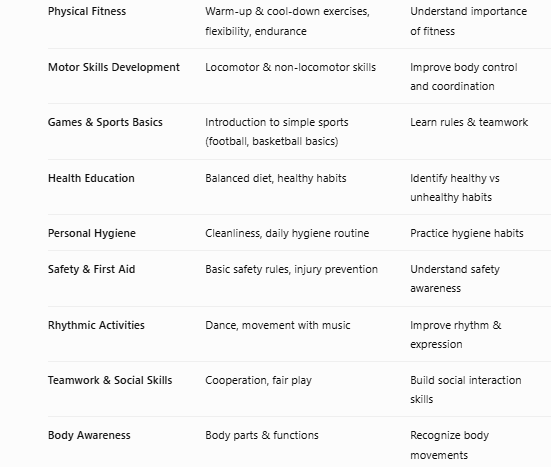
| Unit / Area | Topics Covered | Learning Outcomes | Activities / Skills |
|---|---|---|---|
| Physical Fitness | Warm-up & cool-down exercises, flexibility, endurance | Understand importance of fitness | Stretching, jogging, simple aerobic exercises |
| Motor Skills Development | Locomotor & non-locomotor skills | Improve body control and coordination | Running, hopping, jumping, balancing |
| Games & Sports Basics | Introduction to simple sports (football, basketball basics) | Learn rules & teamwork | Passing, catching, kicking, simple drills |
| Health Education | Balanced diet, healthy habits | Identify healthy vs unhealthy habits | Food chart activities, discussions |
| Personal Hygiene | Cleanliness, daily hygiene routine | Practice hygiene habits | Handwashing, grooming habits |
| Safety & First Aid | Basic safety rules, injury prevention | Understand safety awareness | Playground safety drills |
| Rhythmic Activities | Dance, movement with music | Improve rhythm & expression | Simple dance steps, action songs |
| Teamwork & Social Skills | Cooperation, fair play | Build social interaction skills | Group games, relay races |
| Body Awareness | Body parts & functions | Recognize body movements | Mirror exercises, posture training |
| Mental Well-being | Relaxation, emotional control | Develop positive mindset | Breathing exercises, mindfulness |
Assessment Pattern
| Assessment Type | Weightage | Details |
|---|---|---|
| Practical Performance | 40% | Physical activities, participation |
| Skill Demonstration | 20% | Motor skills & sports basics |
| Health Knowledge | 20% | Hygiene, nutrition concepts |
| Behavior & Participation | 20% | Teamwork, discipline |
Kuwait Grade 3 Physical Education Curriculum 2026-27: Activities & Skills
1. Motor Skills Development
- Fundamental movement skills:
- Running, jumping, hopping, skipping
- Throwing, catching, kicking
- Balance and coordination exercises
- Agility and reaction-time activities
The curriculum emphasizes learning through movement, helping children gain control over their bodies and improve coordination.
2. Games and Sports
- Simple team games (mini football, relay races)
- Introduction to sports rules and fair play
- Cooperative games promoting teamwork
Students begin to understand teamwork, discipline, and sportsmanship through structured play.
3. Gymnastics & Fitness
- Basic gymnastics (rolling, stretching, balancing)
- Flexibility and strength-building exercises
- Rhythmic movements and simple dance
Focus is on body control, posture, and flexibility rather than competition.
4. Physical Fitness Awareness
- Importance of daily physical activity
- Understanding exercise benefits:
- Strong muscles and bones
- Better stamina and energy
By Grade 3, students are encouraged to enjoy active lifestyles and reduce sedentary habits.
Human Health Education Topics
1. Personal Hygiene
- Handwashing and cleanliness
- Oral hygiene (brushing teeth)
- Clean clothes and body care
Health education helps children adopt daily hygiene habits for disease prevention.
2. Nutrition & Healthy Eating
- Balanced diet basics:
- Fruits and vegetables
- Water intake
- Avoiding junk food and sugary drinks
Students learn to make informed food choices, aligning with national competence goals on health awareness.
3. Safety & Injury Prevention
- Playground safety rules
- Safe use of equipment
- Basic first-aid awareness
Emphasis on personal and community safety in daily life.
4. Growth & Well-being
- Importance of rest and sleep
- Emotional well-being (feeling safe, happy)
- Respecting personal space and others
Encourages holistic development (physical + emotional health).
Competency-Based Learning Outcomes (Grade 3)
| Domain | Expected Learning Outcomes |
|---|---|
| Physical Skills | Perform basic movements with coordination and confidence |
| Health Awareness | Understand hygiene, nutrition, and healthy habits |
| Social Skills | Work in teams and follow rules during games |
| Personal Development | Make simple healthy lifestyle choices |
| Safety Awareness | Demonstrate safe behavior in physical activities |
Kuwait’s curriculum aims to ensure students can “make informed choices about health, diet, and physical activity” by the end of primary education.
Teaching Methodology
- Activity-based and experiential learning
- Group games and peer interaction
- Demonstration and practice sessions
- Integration with subjects like Science (health topics)
Schools often combine international curricula (e.g., British framework) with Kuwait’s national standards to provide a balanced and engaging learning experience.
Assessment Pattern
Assessment is continuous and skill-based, including:
- Observation of physical performance
- Participation in activities
- Demonstration of hygiene practices
- Basic oral or practical evaluations
No heavy written exams—focus is on practical skills and behavior.
Key Features of Kuwait Grade 3 PE & Health Curriculum
- Competency-based learning approach
- Equal focus on physical activity and health education
- Encourages active, healthy lifestyles from an early age
- Promotes teamwork, discipline, and responsibility
- Aligns with global education standards and Kuwait Vision reforms
Conclusion
The Kuwait Grade 3 Human Health and Physical Education Curriculum 2026–27 is designed to build a strong foundation for children’s physical fitness, hygiene awareness, and emotional well-being. By combining practical activities with health education, it prepares students to lead active, safe, and healthy lives, while also developing essential life skills like teamwork, discipline, and self-care.
About The Author
